第4変化と第5変化は語の数は少ないが、解剖でも臨床でも毎日出る語が集まっている。ductus, processus, sinus, plexus, genu, facies——そして status, infarctus, situs。
どちらも主格・属格・複数が同じ形に重なるのが特徴で、語尾だけでは格が決まらないことが多い。名詞のあとの形容詞の語尾で格と数を読むのがこつである。
- 第4変化 — 属格も -us の男性名詞
- -u の中性名詞 — genu と cornu
- 臨床の第4変化 — status・infarctus・situs
- 第5変化 — facies と、病名の -ies
第4変化 — 属格も -us の男性名詞Declinatio quarta
主格単数 -us、属格単数も -us の名詞で、ほとんどが男性である。
| 格 | 単数 | 複数 |
|---|---|---|
| 主格 | ductus | ductus |
| 属格 | ductus | ductuum |
| 対格 | ductum | ductus |
| 奪格 | ductu | ductibus |
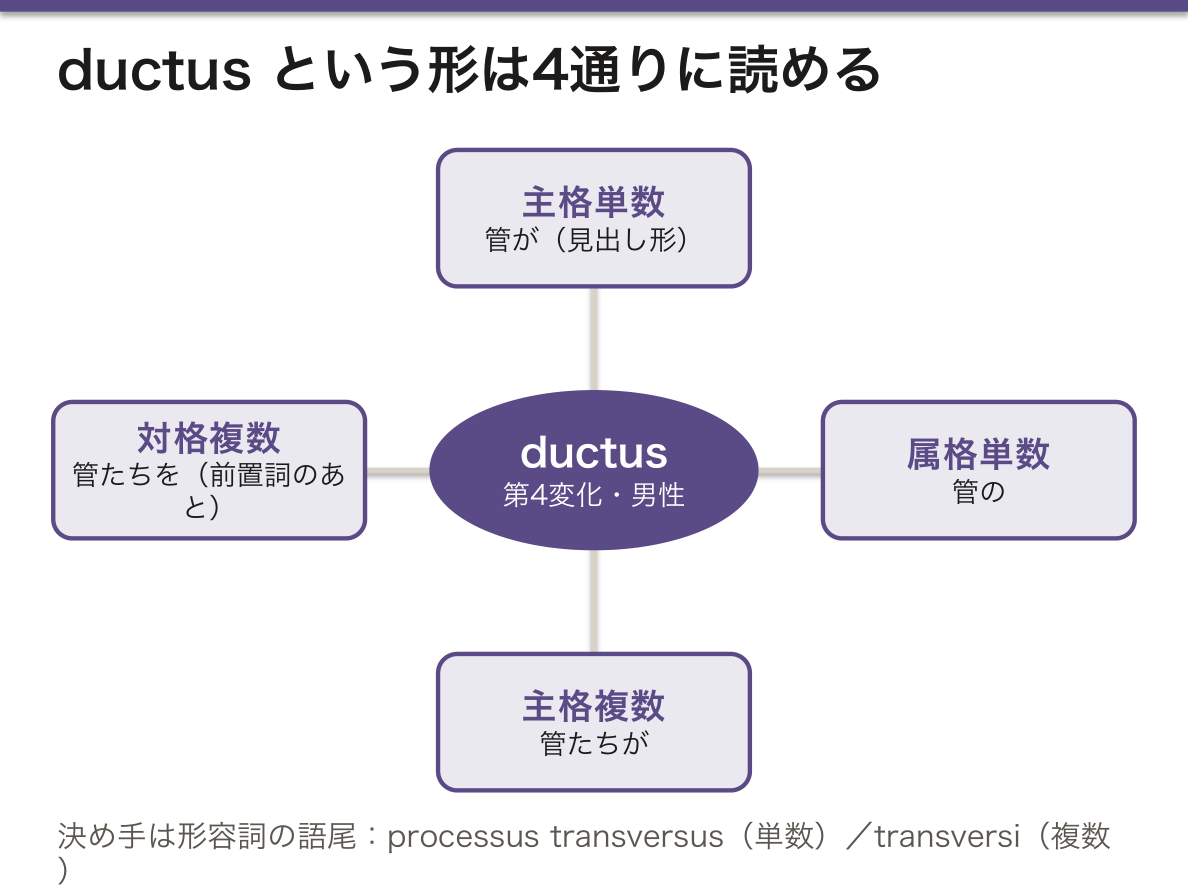
ductus という形は4通りに読める(主格単数・属格単数・主格複数・対格複数)。解剖の語:ductus, processus, sinus, plexus, arcus, meatus, hiatus, recessus——Ductus thoracicus、Processus mastoideus、Sinus frontalis、Plexus brachialis、Arcus aortae、Meatus acusticus externus。
例外的に女性なのが manus(手)と acus(針)で、形容詞は女性形になる:manus dextra、dorsum manus(手背:manus は属格)。
第2変化の -us と見分ける方法は辞書形しかない。sulcus, i(溝)は第2変化、processus, us(突起)は第4変化。nervus・musculus・humerus・uterus も第2変化である。複数にすると違いが出る:sulci に対して processus(形が変わらない)。
形が変わらない名詞の数は、形容詞が教えてくれる。processus transversus(横突起・単数)と processus transversi(複数)、sinus frontalis(単数)と sinus paranasales(副鼻腔・複数)。名詞は同じでも、形容詞の -us → -i、-is → -es で数が読める。
第4変化の名詞の多くは、動詞から作った「動き」の名詞である:ductus(導くこと → 管)、processus(前に出ること → 突起)、recessus(退くこと → 陥凹)、plexus(編むこと → 叢)、meatus(通ること → 道)。形の名前ではなく動きの名前だと思うと覚えやすい。
English version
Core
Nouns with nominative singular -us and genitive singular also -us. Almost all are masculine.
| Case | Singular | Plural |
|---|---|---|
| Nom. | ductus | ductus |
| Gen. | ductus | ductuum |
| Acc. | ductum | ductus |
| Abl. | ductu | ductibus |
The form ductus can be read four ways (nom. sg., gen. sg., nom. pl., acc. pl.). Anatomical words: ductus, processus, sinus, plexus, arcus, meatus, hiatus, recessus — Ductus thoracicus, Processus mastoideus, Sinus frontalis, Plexus brachialis, Arcus aortae, Meatus acusticus externus.
Manus (hand) and acus (needle) are feminine exceptions and take feminine adjectives: manus dextra, dorsum manus (back of the hand; manus is genitive).
Going further
Only the dictionary form separates these from second-declension -us nouns. Sulcus, i (groove) is second declension; processus, us is fourth. Nervus, musculus, humerus and uterus are second declension too. The plural shows the difference: sulci against processus (unchanged).
When the noun does not change, the adjective tells you the number. Processus transversus (transverse process, singular) and processus transversi (plural); sinus frontalis (singular) and sinus paranasales (paranasal sinuses, plural). The noun is the same, but -us → -i and -is → -es in the adjective show the number.
Many fourth-declension nouns are nouns of movement made from verbs: ductus (a leading → duct), processus (a going forward → process), recessus (a drawing back → recess), plexus (a braiding → plexus), meatus (a passing → passage). Thinking of them as names of movements, not of shapes, makes them easier to remember.
-u の中性名詞 — genu と cornuGenu, cornu
第4変化には -u で終わる中性名詞が少数あり、解剖では genu(膝)と cornu(角)が重要である。
| 格 | 単数 | 複数 |
|---|---|---|
| 主格 | genu | genua |
| 属格 | genus | genuum |
| 対格 | genu | genua |
| 奪格 | genu | genibus |
属格は genus・cornus。Articulatio genus(膝関節)、Regio genus anterior(前膝部)、Ligamenta cruciata genus(膝十字靱帯)。cornu は脊髄灰白質の cornu anterius / posterius(前角・後角)、舌骨の cornu majus / minus、子宮の cornu uteri。複数は cornua。
genus という綴りは2つの別の語である。①genu(膝)の属格 genus、②「種類・性」を意味する第3変化の中性名詞 genus, generis(genus masculinum=男性)。articulatio genus は「膝の関節」であって「種類の関節」ではない。
中性なので形容詞は中性形になる。cornu anterius の -ius は比較級の中性(比較級の項目)で、cornu anterior とは書かない。
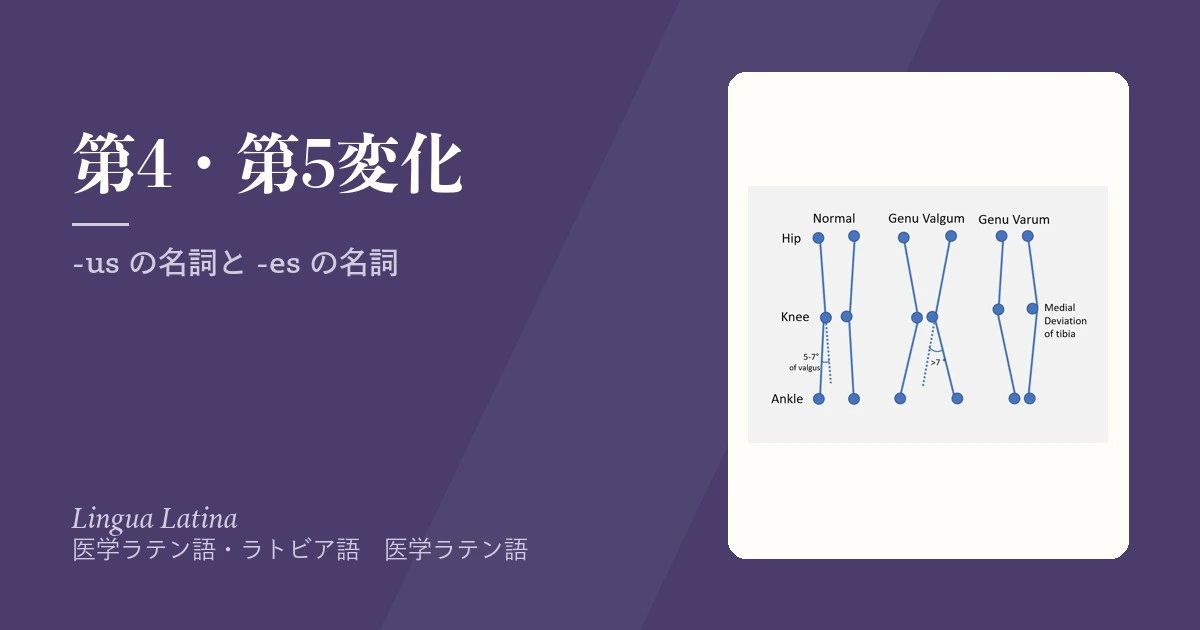
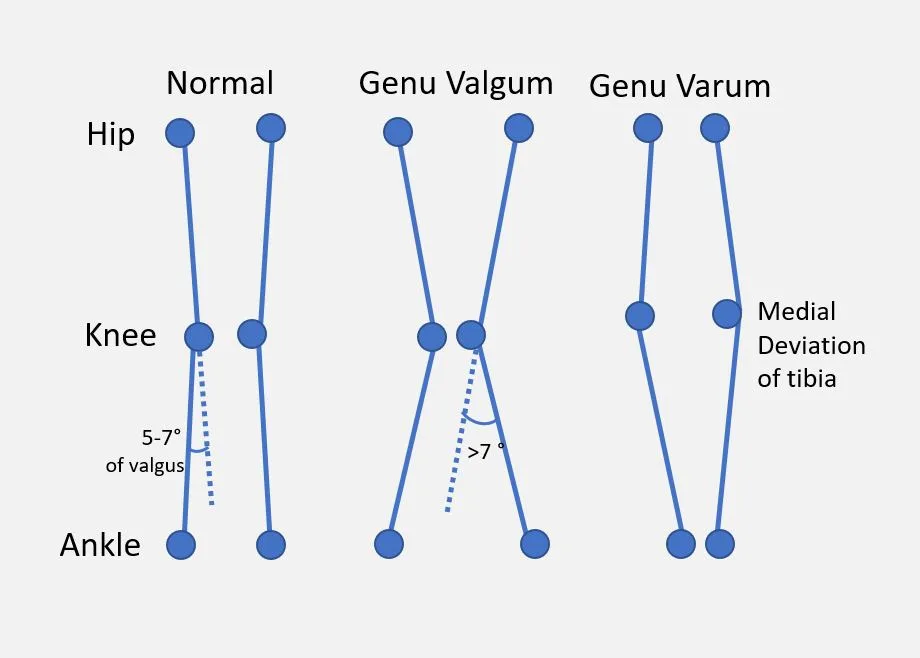
genu valgum(外反膝=X脚)と genu varum(内反膝=O脚)は中性形容詞 -um がついた形である。valgus は関節より遠位の部分が外側へ、varus は内側へ向く変形を言う。膝から下が外へ開くのが X 脚(valgum)、内へ入るのが O 脚(varum)で、hallux valgus(外反母趾)も母趾の先が外側(小趾側)へ向くので valgus である。脳の海馬の CA1〜CA4 の CA は cornu Ammonis(アンモン角)の頭文字である。
English version
Core
The fourth declension has a few neuter nouns in -u. In anatomy the important ones are genu (knee) and cornu (horn).
| Case | Singular | Plural |
|---|---|---|
| Nom. | genu | genua |
| Gen. | genus | genuum |
| Acc. | genu | genua |
| Abl. | genu | genibus |
The genitive is genus, cornus. Articulatio genus (knee joint), Regio genus anterior (anterior region of the knee), Ligamenta cruciata genus (cruciate ligaments of the knee). Cornu appears in the cornu anterius / posterius of the spinal grey matter, the cornu majus / minus of the hyoid, and the cornu uteri. The plural is cornua.
Going further
The spelling genus is two different words. (1) The genitive of genu (knee), genus; (2) the third-declension neuter genus, generis, “kind, gender” (genus masculinum = masculine gender). Articulatio genus is “joint of the knee”, not “joint of a kind”.
Being neuter, they take neuter adjectives. The -ius of cornu anterius is the neuter comparative (see comparatives); you do not write cornu anterior.
In the clinic
Genu valgum (knock-knee) and genu varum (bow-leg) carry the neuter adjective ending -um. Valgus describes a deformity in which the part distal to the joint points outwards, varus one in which it points inwards. If the leg below the knee angles outwards, it is knock-knee (valgum); inwards, bow-leg (varum). Hallux valgus is valgus too, because the tip of the big toe points outwards (towards the little toe). The CA of hippocampal fields CA1–CA4 stands for cornu Ammonis (Ammon’s horn).
臨床の第4変化 — status・infarctus・situsStatus epilepticus
臨床で使う第4変化の名詞は多い。どれも男性で、属格・複数も -us である。
| 名詞 | 意味 | 臨床の用語 |
|---|---|---|
| status | 状態 | status epilepticus(てんかん重積状態)、status asthmaticus、status praesens(現症) |
| infarctus | 梗塞 | infarctus myocardii(心筋梗塞) |
| situs | 位置 | situs inversus(内臓逆位) |
| pulsus | 脈 | pulsus paradoxus(奇脈) |
| prolapsus | 脱出 | prolapsus uteri(子宮脱) |
| abscessus | 膿瘍 | abscessus hepatis(肝膿瘍) |
| partus | 分娩 | ante partum, post partum |
| exitus | 転帰 | exitus letalis(死亡) |
ほかに decubitus(褥瘡・臥位)、pruritus(瘙痒)、vomitus(嘔吐)、reflexus(反射)、defectus(欠損)。
形容詞が付いたときの変化は、ductus thoracicus と同じである。status epilepticus の属格は status epileptici——名詞は -us のまま、形容詞だけ -i になる。前置詞のあとでは奪格 -u・対格 -um が出る:in situ(奪格)、post partum(対格)(対格と奪格の章)。
decubitus は「横たわること」が元の意味である。長く横たわってできる潰瘍が褥瘡で、画像では decubitus が「臥位」の意味で使われる(側臥位撮影 lateral decubitus view)。
pulsus paradoxus(奇脈)は、吸気時に収縮期血圧が10 mmHg 以上下がる所見で、心タンポナーデの重要な徴候である。situs inversus(内臓逆位)は、慢性副鼻腔炎・気管支拡張症と組み合わさると Kartagener 症候群(線毛機能不全症)を考える。status epilepticus は、強直間代発作なら5分続いた時点で止める治療を始める状態とされる。
English version
Core
Many clinical nouns belong to the fourth declension. All are masculine, with -us in the genitive and plural too.
| Noun | Meaning | Clinical term |
|---|---|---|
| status | state | status epilepticus, status asthmaticus, status praesens (present state) |
| infarctus | infarction | infarctus myocardii (myocardial infarction) |
| situs | position | situs inversus |
| pulsus | pulse | pulsus paradoxus |
| prolapsus | prolapse | prolapsus uteri (uterine prolapse) |
| abscessus | abscess | abscessus hepatis (liver abscess) |
| partus | childbirth | ante partum, post partum |
| exitus | outcome | exitus letalis (death) |
Also decubitus (pressure sore; lying position), pruritus (itching), vomitus (vomiting), reflexus (reflex), defectus (defect).
Going further
With an adjective they behave like ductus thoracicus. The genitive of status epilepticus is status epileptici: the noun stays -us and only the adjective becomes -i. After prepositions the ablative -u and accusative -um appear: in situ (ablative), post partum (accusative) (chapter on accusative and ablative).
Decubitus originally means “lying down”. An ulcer from lying too long is a pressure sore, and in imaging decubitus means “lying position” (lateral decubitus view).
In the clinic
Pulsus paradoxus is a fall in systolic pressure of 10 mmHg or more on inspiration, an important sign of cardiac tamponade. Situs inversus together with chronic sinusitis and bronchiectasis suggests Kartagener syndrome (primary ciliary dyskinesia). Status epilepticus is defined so that, for tonic–clonic seizures, treatment to stop the seizure starts once it has lasted 5 minutes.
第5変化 — facies と、病名の -iesDeclinatio quinta
主格 -es、属格 -ei の名詞で、女性(dies・meridies だけ男性)。語の数は少ない。
| 格 | 単数 | 複数 |
|---|---|---|
| 主格 | facies | facies |
| 属格 | faciei | facierum |
| 対格 | faciem | facies |
| 奪格 | facie | faciebus |
facies は「面」と「顔」の2つの意味を持つ。解剖では「面」として facies articularis(関節面)、facies anterior、複数 facies articulares。「顔」としては属格 faciei で:Musculi faciei(顔面筋)、Arteria transversa faciei(顔面横動脈)。ほかに superficies(表面)、caries, scabies, rabies, series, species, dies(日)。
-es で終わる語がすべて第5変化ではない。pes, pedis(足)や paries, parietis(壁)は第3変化である。paries の語幹 pariet- から parietalis(壁側の・頭頂の)ができる——os parietale(頭頂骨)は「頭蓋の側壁の骨」という意味である。
時を表す語も第5変化:dies(日)、meridies(正午)。a.m.・p.m. は ante meridiem・post meridiem(正午の前・後)の略で、meridiem は meridies の対格である。pro die(1日あたり)の die は奪格。
facies は臨床では「顔貌」を指す。facies Hippocratica(ヒポクラテス顔貌:死に瀕した患者の、目がくぼみ鼻がとがった顔)、満月様顔貌(Cushing 症候群)、仮面様顔貌(Parkinson 病)。caries dentis(齲蝕)、scabies(疥癬)——疥癬の原因のヒゼンダニの学名 Sarcoptes scabiei は scabies の属格で、「疥癬の Sarcoptes」という意味である。rabies は狂犬病。
English version
Core
Nouns with nominative -es and genitive -ei. They are feminine (only dies and meridies are masculine), and there are few of them.
| Case | Singular | Plural |
|---|---|---|
| Nom. | facies | facies |
| Gen. | faciei | facierum |
| Acc. | faciem | facies |
| Abl. | facie | faciebus |
Facies has two meanings, “surface” and “face”. In anatomy, as “surface”: facies articularis (articular surface), facies anterior, plural facies articulares. As “face”, in the genitive faciei: Musculi faciei (facial muscles), Arteria transversa faciei (transverse facial artery). Others: superficies (surface), caries, scabies, rabies, series, species, dies (day).
Going further
Not every word in -es is fifth declension. Pes, pedis (foot) and paries, parietis (wall) are third declension. The stem pariet- of paries gives parietalis (parietal): os parietale is “the bone of the side wall of the skull”.
Words of time are fifth declension too: dies (day), meridies (noon). A.m. and p.m. stand for ante meridiem and post meridiem (before and after noon); meridiem is the accusative of meridies. In pro die (per day), die is ablative.
In the clinic
In clinical use, facies means “facial appearance”. Facies Hippocratica (the face of a dying patient, with sunken eyes and a pinched nose), moon face (Cushing syndrome), mask-like face (Parkinson’s disease). Caries dentis (dental caries), scabies — the mite that causes it, Sarcoptes scabiei, carries the genitive of scabies: “the Sarcoptes of scabies”. Rabies is rabies.
まとめ
| 第4変化 — 属格も -us の男性名詞 | 主格単数 -us、属格単数も -us の名詞で、ほとんどが男性である。 |
|---|---|
| -u の中性名詞 — genu と cornu | 第4変化には -u で終わる中性名詞が少数あり、解剖では genu(膝)と cornu(角)が重要である。 |
| 臨床の第4変化 — status・infarctus・situs | 臨床で使う第4変化の名詞は多い。どれも男性で、属格・複数も -us である。 |
| 第5変化 — facies と、病名の -ies | 主格 -es、属格 -ei の名詞で、女性(dies・meridies だけ男性)。 |
このノートは医学生が授業の内容を自分の言葉でまとめたもので、診療の判断に使うものではありません。誤りに気づいたらお知らせください。