- 医師の基本的な倫理的義務と、治療的対話の障壁
- 患者の背景 — 文化的健康資本と、無意識の偏り
- 患者満足と共同意思決定 — 参加を支える3つの鍵
- 服薬アドヒアランス — 何が守らせ、何が妨げるか
医師の基本的な倫理的義務と、治療的対話の障壁
4原則——自律の尊重(説明と同意)、無危害、善行、正義(公平な分配)。これに誠実と守秘が加わる。
治療的対話の障壁——①時間の不足(最大の障壁)②専門用語③患者の話を遮ること(研究では医師は平均十数秒で遮る)④言語と文化の壁——ラトビアで学ぶ日本人にとって現実の問題⑤健康リテラシーの差⑥電子カルテによる視線の分散⑦感情への恐れ(悪い知らせを避ける)⑧権力の非対称(患者が質問を控える)。
「障壁の多くは個人の努力不足ではなく、制度の設計から生じる」と言えると社会学的な答えになる。
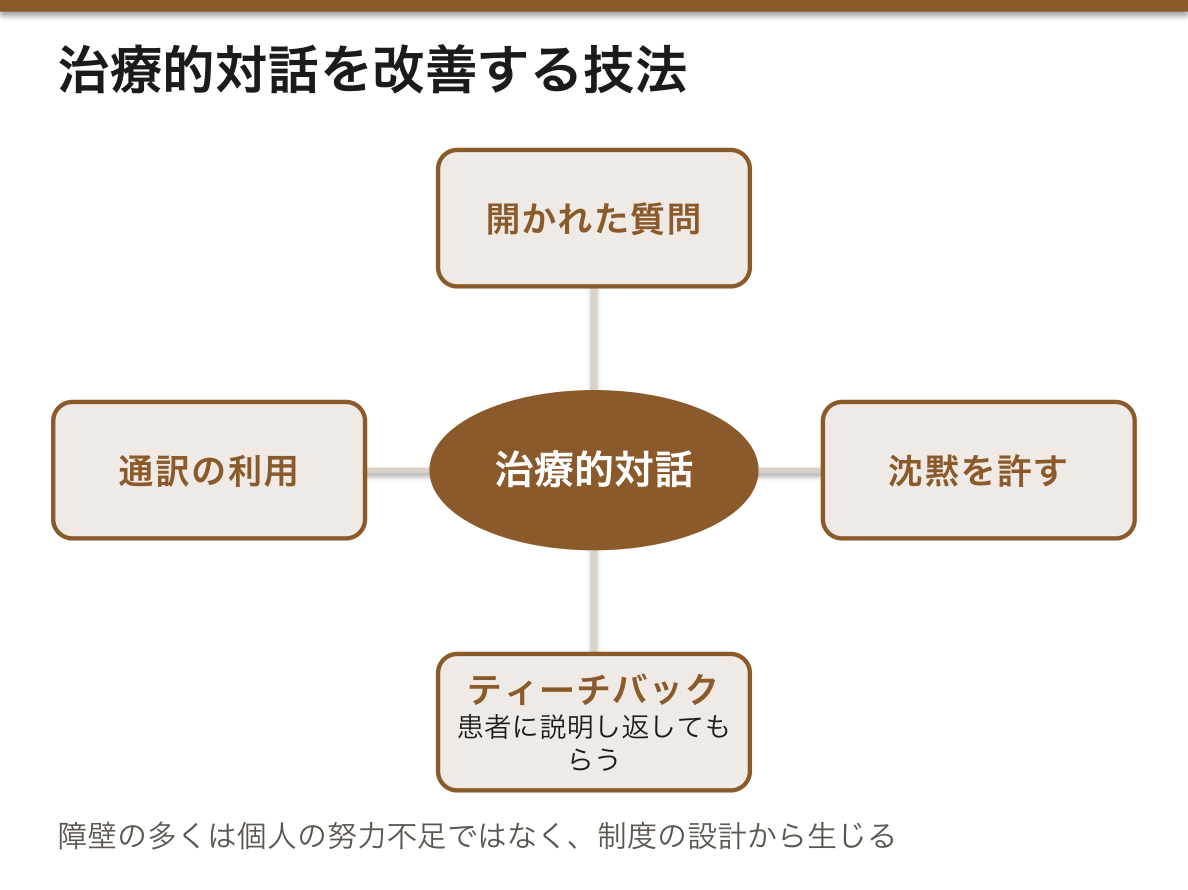
改善の技法として挙がるのは開かれた質問、沈黙を許すこと、teach-back(患者に説明し返してもらう)、通訳の利用。
English version
Core
The four principles — respect for autonomy (information and consent), non-maleficence, beneficence, justice (fair distribution). To these are added veracity and confidentiality.
The barriers to therapeutic dialogue — ① lack of time (the greatest barrier) ② technical language ③ interrupting the patient (research finds doctors interrupt within a dozen or so seconds on average) ④ barriers of language and culture — a real problem for a Japanese student studying in Latvia ⑤ differences in health literacy ⑥ the gaze divided by the electronic record ⑦ fear of emotion (avoiding bad news) ⑧ the asymmetry of power (the patient refrains from asking).
Being able to say that most of the barriers arise from the design of the system rather than from a lack of individual effort makes it a sociological answer.
Going further
The techniques raised for improvement are open questions, allowing silence, teach-back (having the patient explain it back) and using an interpreter.
患者の背景 — 文化的健康資本と、無意識の偏り
同じ病気でも、患者の背景によって診察室での扱われ方は変わる。それを説明する概念の1つが Shim の文化的健康資本 cultural health capital である。Bourdieu の文化資本を医療の場に当てはめたもので、医療の場で評価される技能・態度・話し方の蓄えを指す。
中身は、医学の話題と言葉の知識(健康リテラシー)、どの情報が医療者にとって大事かを知っていること、それを医学的に通じる形で手短に伝える技能、自分の健康に積極的に取り組む姿勢(統制感・自己効力感)、自分の身体を道具的に扱える態度、自己管理を信じ実行する資源、将来を計算して備える志向、相手に合わせて話し方を変える感覚、そして自分の社会的地位や「賢い消費者」であることを伝える力である。
これらは医療者自身が身につけている性質でもあるので、医療者は意識しないうちに、文化的健康資本の多い患者により良く応じる。診察時間が短く、門番の役割が強まった今の医療では、官僚的な手続きをこなし、専門家とうまく話せる患者ほど得をする。
背景が関係を左右するもう1つの経路が偏り(バイアス)である。あからさまな偏見が減ったあとに注目されたのが無意識の偏り implicit bias——本人が意図も自覚もしていない偏りである。米国の研究では、同じ条件でも黒人患者は白人患者より心臓カテーテル検査や冠動脈の再灌流療法を受けにくく、その差が死亡率の差につながっていた。医療者の無意識の人種的偏りは、一般の人と同じくらいの水準で見つかっている。
性的少数者やトランスジェンダーの人々も、医療者との否定的な経験や差別の予期から受診を避けることが多い。望まれるのは、性自認を決めつけずに自然に尋ねること、多様性を尊重した言葉づかい、その健康課題についての知識である。逆に、誤った性別で呼ぶこと、知識の欠如、嫌悪の態度は関係を壊す。偏りは個人の悪意より、文化と制度の中で学ばれたものとして扱うのが社会学の見方である。
実践としては、問診票の性別欄や家族の書き方を見直す、通訳を使う、患者の話し方が拙くても情報の価値を下げない、などがある。「説明が上手な患者」と「説明が下手な患者」で診療の質が変わっていないかを自分で点検することが、背景による格差を減らす第一歩になる。
English version
Core
With the same illness, patients are treated differently depending on their background. One concept that explains this is Shim’s cultural health capital. It applies Bourdieu’s cultural capital to health care: the set of skills, attitudes and ways of speaking that are valued in medical settings.
It includes knowledge of medical topics and words (health literacy), knowing which information matters to providers, the skill to report it briefly in medical terms, an active stance toward one’s own health (mastery, self-efficacy), an instrumental attitude toward one’s body, belief in and resources for self-discipline, a future-oriented and calculating outlook, sensitivity to adjust one’s style of talk, and the ability to signal social status and being a “smart consumer”.
Providers have these traits themselves, so without noticing they respond better to patients with more cultural health capital. With short visits and strong gate-keeping, patients who can handle bureaucracy and talk well with experts gain more.
Going further
Another path is bias. As open prejudice declined, attention moved to implicit bias — bias that the person does not intend or notice. In US studies, under the same conditions Black patients were less likely than white patients to receive cardiac catheterisation or revascularisation, and this was linked to higher mortality. Implicit racial bias among health professionals is found at about the same level as in the general public.
Sexual and gender minorities also often avoid care because of negative experiences or expected discrimination. They want questions about identity asked in a routine, non-judgemental way, language that respects diversity, and knowledge of their health issues. Misgendering, lack of knowledge and hostile attitudes damage the relationship. Sociology treats bias not as personal malice but as something learned in culture and institutions.
In the clinic
In practice: review the sex and family fields on intake forms, use interpreters, and do not discount information because a patient explains it poorly. Check yourself: is the quality of your care different for patients who explain well and those who do not? This is the first step to reducing inequality by background.
患者満足と共同意思決定 — 参加を支える3つの鍵
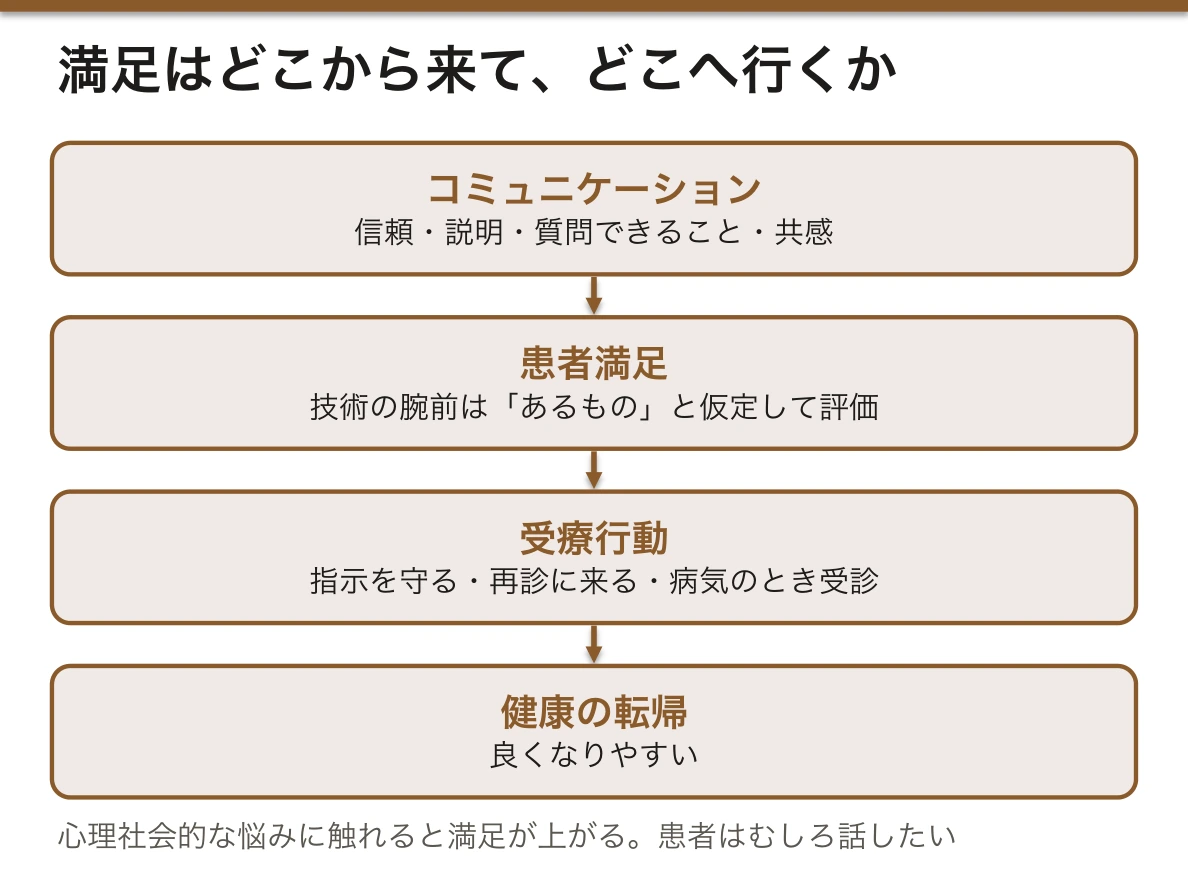
患者満足はそれ自体が望ましいだけでなく、満足している患者ほど指示を守り、再診に来て、病気のときに受診する。結果として健康の転帰も良くなりやすい。多くの研究から、満足を左右する要因について3つの結論が出ている。
①満足を決めるのはコミュニケーションの質である。多くの患者は医師の技術的な腕前を評価できないので、腕前は「あるもの」と仮定し、信頼関係、心配を話せる機会、病状の説明の量、質問できること、共感で評価する。同じ言語で話せると満足は高い。②心理社会的な悩みに触れると満足が上がる。医師は「患者は話したくないだろう」と思いがちだが、患者はむしろ話したい。③患者の背景の多くは満足にあまり影響しないが、人種・民族、性的指向、性自認は例外で、少数派ほど満足が低い傾向が続いている。
満足を中心に置くのが患者中心のケアで、その核が共同意思決定 shared decision making——医師と患者が、臨床の根拠と、患者の好み・価値観とを突き合わせて、検査・治療・ケアの計画を一緒に選ぶ過程——である。
参加と共同意思決定を高める3つの鍵:
| 鍵 | 中身 |
|---|---|
| 文化的能力 cultural competency | 異なる文化の人と効果的に働く力。自分の文化背景の自覚、他文化の知識、開かれた態度、伝える技能。ただし「文化の違いを学ぶ」だけでなく、明示的・無意識の偏りに向き合わないと格差は減らない |
| 健康リテラシー health literacy | 健康の情報とサービスを手に入れ、処理し、理解して適切に決める力。書類を書く、病歴を伝える、慢性疾患を自己管理する、確率やリスクを理解することを含む |
| 患者活性化 patient activation | 自分の医療に積極的に関わるための技能と自信。生活習慣の決定や医療資源の使い方に責任を持つこと。個人の努力だけでなく、それを後押しする環境づくりも要る |
なぜ情報を渡すだけでは足りないのか。糖尿病の薬の選択の研究では、各薬の根拠を分かりやすくまとめて渡しても、患者の決定はあまり助からなかった。体重が増えるか減るか、注射か飲み薬か、といった患者にとって大事な点で根拠を並べ直し、会話の中で一緒に考えると、患者は質問し、自分に合った決定ができた。共同意思決定の場は書類ではなく会話である。
満足・共同意思決定・アドヒアランスは1本の線でつながる(アドヒアランスは「服薬アドヒアランス」の項)。teach-back や、選択肢を患者の生活の言葉で並べた意思決定支援ツールは、この3つの鍵を診察室で使える形にしたものである。
English version
Core
Patient satisfaction is good in itself, and satisfied patients follow instructions more, come back for follow-up and seek care when ill. Their outcomes tend to be better. Many studies give three conclusions about what affects satisfaction.
(1) The quality of communication decides satisfaction. Most patients cannot judge technical skill, so they assume it and judge rapport, the chance to express worries, the amount of explanation, the chance to ask questions, and empathy. Speaking the same language raises satisfaction. (2) Talking about psychosocial concerns raises satisfaction. Doctors often think patients do not want this, but patients do. (3) Most background traits have little effect, but race and ethnicity, sexual orientation and gender identity are exceptions: minorities still tend to be less satisfied.
Patient-centred care puts satisfaction at the centre, and its core is shared decision-making: doctor and patient choose tests, treatments and care plans together, balancing clinical evidence with the patient’s preferences and values.
Going further
Three keys to more participation and shared decision-making:
| Key | Content |
|---|---|
| Cultural competency | The ability to work well with people of other cultures: awareness of one’s own culture, knowledge of others, openness and communication skills. But learning “cultural differences” is not enough; explicit and implicit bias must also be faced |
| Health literacy | The ability to get, process and understand health information and services to make good decisions: filling in forms, sharing history, managing chronic disease, understanding probability and risk |
| Patient activation | The skills and confidence to take an active part in one’s own care, including lifestyle decisions and the use of resources. It needs supportive environments, not only personal effort |
Why is giving information not enough? In a study of diabetes medicines, a clear summary of the evidence for each drug did little to help patients decide. When the evidence was arranged by what mattered to patients (weight gain or loss, injection or tablet) and discussed together, patients asked questions and reached decisions that fit them. Shared decision-making happens in conversation, not on paper.
In the clinic
Satisfaction, shared decision-making and adherence are linked in one line (see the item on medication adherence). Teach-back and decision aids that list options in the language of the patient’s daily life are ways to use the three keys in the clinic.
服薬アドヒアランス — 何が守らせ、何が妨げるか
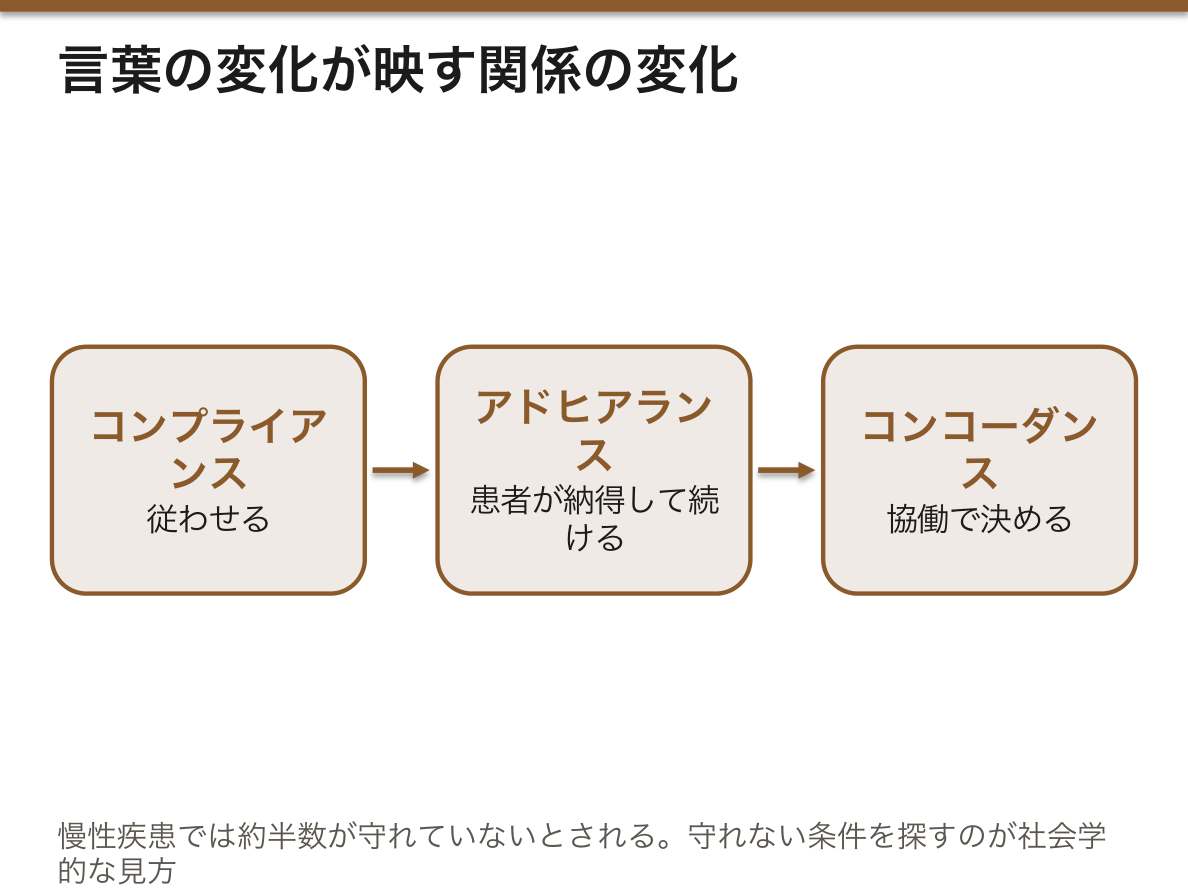
コンプライアンス(従わせる)からアドヒアランス(患者が納得して続ける)へ、さらにコンコーダンス(協働で決める)へと語が変わってきたこと自体が、関係の変化を映す。
慢性疾患では約半数が守れていないとされる。
関連する要因——①治療の複雑さ(回数・種類が多いほど下がる)②副作用③症状が無いこと(高血圧・脂質異常は自覚がないので続かない)④費用⑤健康リテラシー⑥医師との関係の質——これが最も強い予測因子の一つ⑦社会的支援⑧病気の説明モデルが医師と患者でずれていること。
「守らない患者」を責めるのではなく、守れない条件を探すのが社会学的な見方。
実務上の含意——処方を単純にする、費用を確認する、なぜその薬が要るのかを患者の言葉で共有する。「医学の黄金時代」の章の患者中心のケアと同じ結論に至る。
English version
Core
That the word has changed from compliance (making them obey) to adherence (the patient continuing with understanding) and on to concordance (deciding together) itself reflects the change in the relationship.
In chronic disease about half do not manage it.
The factors involved — ① the complexity of the regimen (the more doses and kinds, the lower it falls) ② adverse effects ③ the absence of symptoms (hypertension and dyslipidaemia are not felt, so it is not sustained) ④ cost ⑤ health literacy ⑥ the quality of the relationship with the doctor — one of the strongest predictors ⑦ social support ⑧ a mismatch between the doctor’s and the patient’s explanatory models of the illness.
Rather than blaming "the patient who does not comply", look for the conditions that make compliance impossible — that is the sociological view.
Going further
The practical implications — simplify the prescription, check the cost, share in the patient’s own words why the medicine is needed. It arrives at the same conclusion as patient-centred care in the chapter on the golden age of medicine.
まとめ
| 医師の基本的な倫理的義務と、治療的対話の障壁 | 4原則——自律の尊重(説明と同意)、無危害、善行、正義(公平な分配)。 |
|---|---|
| 患者の背景 — 文化的健康資本と、無意識の偏り | 同じ病気でも、患者の背景によって診察室での扱われ方は変わる。 |
| 患者満足と共同意思決定 — 参加を支える3つの鍵 | 患者満足はそれ自体が望ましいだけでなく、満足している患者ほど指示を守り、再診に来て、病気のときに受診する。 |
| 服薬アドヒアランス — 何が守らせ、何が妨げるか | コンプライアンス(従わせる)からアドヒアランス(患者が納得して続ける)へ、さらにコンコーダンス(協働で決める)へと語が変わってきたこと自体が、関係の変化を映す。 |
このノートは医学生が授業の内容を自分の言葉でまとめたもので、診療の判断に使うものではありません。誤りに気づいたらお知らせください。