生殖医療の倫理は、2つの問いに分けると整理しやすい。1つは「誰がどんな基準で生殖を選ぶのか」(生殖の自律・子の利益・国家の利益など5つの立場)、もう1つは「胚はどれほど守られるべきか」(胚の道徳的地位)である。
この章ではこの2つを押さえたうえで、生殖技術が社会の価値観とどうぶつかるか(保守派とフェミニズムの両極)、そして人工授精・体外受精・代理懐胎のそれぞれに向けられた反対論を見る。日本の母体保護法、2020年の民法特例法、代理懐胎をめぐる最高裁の判断とも結びつける。
- 生殖をめぐる選択 — 5つの立場
- 胚の道徳的地位 — 「いつ命が始まるか」ではなく「いつ道徳的に重くなるか」
- 生殖技術と社会の価値観 — 保守派とフェミニズムの両極
- 人工授精 — 配偶者間(AIH)と非配偶者間(AID)
- 体外受精 — 適応・危険・反対論
- 代理懐胎(契約による妊娠) — 母とは誰か
生殖をめぐる選択 — 5つの立場
避妊・不妊手術・妊娠中絶、人工授精、出生前・着床前の検査——生殖の選択はどんな道徳原則に従うべきか。代表的な立場が5つある。
| 立場 | 中心となる考え |
|---|---|
| 生殖の自律 | 子をもつか、いつ・どのようにもつかは、親(とくに女性)が自分で決める権利である |
| 生殖の善行 | 選べるなら、親は最もよい人生を送ると見込まれる子を選ぶべきである |
| 将来の子の利益 | 生まれてくる子の利益を損なう選択は許されない |
| 国家の利益 | 人口・公衆衛生・医療費など、社会全体の利益から選択を規制しうる |
| 生命の保護 | 受精の時点からの人の生命は守られるべきで、胚の破壊を伴う選択は許されない |
試金石になる事例がある。ともに遺伝性の聴覚障害をもつカップルが、人工授精で得た胚を検査し、あえて自分たちと同じ聴覚障害の遺伝子をもつ胚を移植したいと望む。聴覚障害は自分たちの文化と言語(手話)の一部であり、子とそれを分かち合いたいからだ。
5つの立場はこの事例で異なる答えを出す。自律の立場なら、親の選択として認められる。生殖の善行の立場なら、聞こえる子の方がより多くの機会をもつと見込まれるので、選ぶべきではない。将来の子の利益の立場は、子の「開かれた未来」——自分で人生を選ぶ幅——を親が狭めてよいかを問う。国家の利益の立場は、社会的な負担や差別の観点から規制を考えうるが、国家が「望ましい子」を決めることの危うさも抱える。生命の保護の立場は、そもそも胚を選別し残りを廃棄すること自体に反対する。
将来の子の利益の議論には非同一性問題という難問がある。聴覚障害の胚を選ばなければ、その子は存在しなかった(別の子が生まれた)。生まれてよかったと言える人生である限り、その子自身は「害された」とは言えない、というパーフィットの指摘である。これに対し、特定の子を害していなくても、避けられた制約をもつ子を生むことは不正でありうる、という反論がある。
聴覚障害の事例は極端に見えるが、論点は日常の出生前検査と地続きである。日本でも母体血を使う出生前遺伝学的検査(NIPT)が広まり、結果を受けた妊娠継続の判断は、まさに「親の自律」と「子の利益」と「障害のある人への社会のまなざし」が交わる場面になっている。遺伝カウンセリングは、そこで特定の答えを押しつけず、本人が考えるのを支える役割を担う。
English version
Core
Contraception, sterilisation, termination of pregnancy, artificial insemination, prenatal and preimplantation testing — which moral principles should guide reproductive choices? There are five main positions.
| Position | Core idea |
|---|---|
| Reproductive autonomy | Whether, when and how to have children is the parents’ (especially the woman’s) right to decide |
| Procreative beneficence | If they can choose, parents should choose the child expected to have the best life |
| Interests of the future child | Choices that damage the interests of the child to be born are not allowed |
| Interests of the state | Choices may be regulated for society’s interests: population, public health, costs |
| Preserving life | Human life must be protected from fertilisation; choices that destroy embryos are wrong |
A test case: a couple who are both deaf from a genetic condition test embryos from artificial insemination and want to implant one with the same deafness gene. Deafness is part of their culture and language (sign language), and they want to share it with their child.
Going further
The five positions answer differently. Autonomy accepts the parents’ choice. Procreative beneficence says no, because a hearing child is expected to have more opportunities. The future child’s interests asks whether parents may narrow the child’s ‘open future’ — the range to choose a life for oneself. The state’s interests might consider regulation because of social costs or discrimination, but a state deciding which children are ‘desirable’ is itself dangerous. Preserving life objects to selecting embryos and discarding the rest at all.
The future child argument meets the non-identity problem. If the deaf embryo had not been chosen, that child would not exist (a different child would be born). As long as the life is worth living, the child cannot say it was harmed — Parfit’s point. The reply is that bringing a child into the world with an avoidable limitation can be wrong even if no particular child is harmed.
In the clinic
The deaf case looks extreme, but it connects with everyday prenatal testing. In Japan, non-invasive prenatal testing (NIPT) using maternal blood has spread. Decisions after a result are exactly where parental autonomy, the child’s interests and society’s view of disabled people meet. Genetic counselling must support the person’s own thinking without imposing an answer.
胚の道徳的地位 — 「いつ命が始まるか」ではなく「いつ道徳的に重くなるか」Embryo
妊娠中絶・胚を使う研究・生殖技術はどれも、胚(や胎児)を死なせることを道徳的に正当化できるかという問いにつながる。よく「命はいつ始まるか」と問われるが、それは適切な問いではない。受精卵も精子も生きた細胞であり、生物学的な生命は途切れずに続いている。問うべきは「命はいつ道徳的に重要になるか」である。胚の道徳的地位を決める考え方は4つある。
| 考え方 | 道徳的地位の根拠 | 困った帰結(批判) |
|---|---|---|
| ①ヒトという生物個体であること | 受精の時点から同じヒトの個体である | 単一の細胞を殺すことが子どもを殺すことと同じだけ悪くなる。緊急避妊も不正になる |
| ②人格になる潜在性 | 放っておけば人格をもつ存在に育つ | 潜在性を断つ避妊や禁欲まで不正になりかねない |
| ③人格であること | 意識、さらに自己意識をもつこと | 新生児も自己意識をもたないので、嬰児殺しが中絶と同程度にしか悪くないことになる |
| ④付与された地位 | 周囲の人々(親・社会)がその存在に価値を認めること | 親がつらく思わないなら新生児を死なせてよい、という正当化はきわめて疑わしい |
4つの考え方は、どれも単独では受け入れがたい帰結を抱える。①は道徳的地位を受精の瞬間に置くので一貫しているが、着床しない胚が自然に大量に失われていることや、一卵性双生児が受精後に分かれることとの整合が問われる。③は「何が人格を人格にするのか」——意識か、自己意識か、それをどう確かめるか——という難問を抱える。④は、価値を認められない存在を守る根拠を失う。
現実の法や指針の多くは、これらを組み合わせた段階的な見方をとる。胚には一定の尊重を払うが、生まれた人と同じ地位は認めず、発達とともに保護を強める。研究に使える胚を受精後14日までに限るという国際的に広く採られた規則は、原始線条が現れ、一卵性双生児に分かれる可能性がなくなる時期に線を引いたものである。
日本では刑法に堕胎罪が残る一方、母体保護法が、身体的または経済的理由で母体の健康を著しく害するおそれがある場合や、暴行・脅迫による妊娠の場合に、指定医師による人工妊娠中絶を認めている。時期は胎児が母体外で生存できない時期(現在は妊娠22週未満)とされる。原則として配偶者の同意が要ることには、女性の自律を損なうとの批判がある。2023年には経口の妊娠中絶薬が承認された。胎児の障害そのものを中絶の理由とする規定(胎児条項)は置かれていない。
English version
Core
Abortion, embryo research and reproductive technologies all lead to the question: can killing an embryo (or fetus) be morally justified? People often ask ‘when does life begin?’, but that is not the right question. Eggs and sperm are living cells too; biological life is continuous. The question is ‘when does life become morally significant?’ There are four approaches to the moral status of the embryo.
| Approach | Basis of moral status | Troubling result (criticism) |
|---|---|---|
| (1) Identity as a human organism | From fertilisation it is the same human individual | Killing a single cell becomes as bad as killing a child; emergency contraception becomes wrong |
| (2) Potential to be a person | Left alone it will grow into a person | Even contraception and abstinence, which prevent potential, may become wrong |
| (3) Identity as a person | Having consciousness, or self-consciousness | Newborns lack self-consciousness, so infanticide becomes no worse than abortion |
| (4) Conferred status | Others (parents, society) give the being value | Justifying killing a newborn because the parents would not feel bad is highly questionable |
Going further
Each approach has unacceptable results on its own. (1) is consistent in placing status at fertilisation, but it must explain the huge natural loss of embryos that never implant, and identical twins splitting after fertilisation. (3) faces the hard question of what makes a person a person — consciousness, self-consciousness, and how to identify them. (4) loses any ground to protect beings no one values.
Most laws and guidelines take a gradual view that combines them: the embryo deserves some respect but not the status of a born person, and protection grows with development. The widely used rule that research embryos may be kept only up to 14 days after fertilisation draws the line where the primitive streak appears and twinning is no longer possible.
In the clinic
Japan’s Penal Code still contains the crime of abortion, but the Maternal Health Act allows designated doctors to perform abortion when continuing the pregnancy would seriously harm the mother’s health for physical or economic reasons, or after rape. It is allowed only before the fetus could survive outside the womb (currently before 22 weeks). The general requirement of the spouse’s consent is criticised as harming women’s autonomy. An oral abortion drug was approved in 2023. There is no clause allowing abortion because of a fetal disability itself.
生殖技術と社会の価値観 — 保守派とフェミニズムの両極
生殖技術は、社会のさまざまな価値観とどう折り合うのか。生殖は自然なものだという見方がある一方で、生殖技術は遺伝性疾患を子に伝えないための手段、妊娠が危険な女性のための手段、そして不妊への解決策として求められてきた。背景には、子をもつことを人生の充実の中心とみなし、子のない女性を「欠けている」とする出生主義(pronatalism)の社会的価値観がある。
生殖技術の道徳的な評価には、両極に2つの立場がある。
| 保守派の立場 | フェミニズムの立場 | |
|---|---|---|
| 主な批判 | 性交と生殖を切り離す。家族と親子関係の伝統的な考えを根本から変える。自然ではない | 女性の抑圧に加担しうる。高額で危険を伴う技術を使うよう多くの女性が圧力を感じる。不妊を防ぐ社会改革を妨げる |
| 根っこにある考え | 自然法論、宗教的な教え | 出生主義への批判、医学・産業の男性支配への警戒 |
両極の立場は正反対の場所から出発しながら、生殖技術に慎重である点で一致する。ただし、それぞれに反論もある。保守派の「自然ではないから悪い」という議論は、自然主義の誤謬(「〜である」から「〜すべき」を導く誤り)に陥りやすい。眼鏡も抗菌薬も自然ではない。また、多元的な民主社会では、特定の宗教の教えを全員を縛る法律の根拠にすることはできない。
フェミニズムの批判のうち重要なのは、資源の優先順位の指摘である。不妊の原因には、性感染症、劣悪な医療、環境汚染、安全でない中絶、出産を遅らせざるをえない雇用や教育の構造が含まれる。高額な技術に資金を注ぐことが、こうした原因への対策から目をそらさせる。一方で、技術の全面的な禁止は女性を判断能力のない者として扱い、闇の施術や海外への「生殖ツーリズム」を生むだけだ、という指摘もある。多くの論者が求めるのは、禁止でも放任でもなく、害を減らす公的な規制である。
日本では2022年から、体外受精を含む不妊治療の多くが公的医療保険の対象になった。経済的な負担は減ったが、出生主義の圧力の中で「受けられるのだから続けるべきだ」と感じる人が増えることにも目を向ける必要がある。治療をやめる選択を支えることも、生殖医療に関わる医療者の役割である。
English version
Core
How do reproductive technologies fit with social values? Some see reproduction as natural, but the technologies have been sought as a way to avoid passing on genetic disorders, a solution for women for whom pregnancy is dangerous, and a solution to infertility. Behind this lie pronatalist social values, which treat having children as central to a fulfilled life and childless women as ‘incomplete’.
There are two polar positions on the moral value of reproductive technologies.
| Conservative position | Feminist position | |
|---|---|---|
| Main criticism | Separates intercourse from reproduction; radically changes traditional ideas of family and relationships; is not natural | Can contribute to the oppression of women; many women feel pressured to use expensive, risky technologies; hinders social reforms that could prevent infertility |
| Root idea | Natural law, religious teaching | Critique of pronatalism; wariness of male dominance in medicine and industry |
Going further
The two positions start from opposite places but agree in being cautious. Each faces counter-arguments. The conservative claim ‘it is not natural, so it is wrong’ easily commits the naturalistic fallacy (deriving ‘ought’ from ‘is’). Glasses and antibiotics are not natural either. And in a pluralist democracy, the teaching of one religion cannot be the basis of laws that bind everyone.
An important feminist point concerns priorities. Causes of infertility include sexually transmitted infections, poor health care, pollution, unsafe abortion, and employment and education structures that force women to delay childbearing. Spending on costly technology distracts from tackling these causes. Yet a total ban treats women as incompetent and only creates illegal procedures and ‘reproductive tourism’ abroad. Many writers call not for bans or laissez-faire, but for public regulation that reduces harm.
In the clinic
Since 2022, much infertility treatment in Japan, including IVF, has been covered by public health insurance. The financial burden has fallen, but under pronatalist pressure more people may feel ‘it’s available, so I must keep trying’. Supporting the choice to stop treatment is also part of the clinician’s role in reproductive medicine.
人工授精 — 配偶者間(AIH)と非配偶者間(AID)Inseminatio artificialis
人工授精は最も古い生殖補助技術で、精液を器具で子宮内などに注入する。2つの型がある。配偶者(パートナー)の精子による人工授精(AIH)は、性交と生殖を切り離した。提供者の精子による人工授精(AID)は、さらに第三者の遺伝的な関与を持ち込んだ。
AID への主な反対論は3つある。
| 反対論 | 中身 |
|---|---|
| 提供細胞の検査が不十分 | 感染症や遺伝性疾患が伝わる危険。非公式な提供ではとくに大きい |
| 関係の問題 | 夫婦の関係、子と育ての親・提供者との関係。子に事実を隠すこと(秘密)の影響 |
| 法的な問題 | 誰が法律上の父か、提供者の匿名性と子が出自を知る権利のどちらを優先するか |
研究によれば、AID で生まれた子の心理的な発達は概して良好であり、問題になりやすいのは生まれ方そのものより家族の中の秘密と欺きだとされる。大人になってから事実を知った人が、親に裏切られたと感じ、遺伝上の父を知る手段がないことに苦しむ例が報告されている。そのため多くの国が提供者の匿名性を見直し、子が一定の年齢に達したら提供者の情報を得られるようにしてきた。
ただし匿名性をなくすと提供者が減る、という現実的な問題がある。また、医療機関が独身女性や同性カップルを対象から外すことは、不妊治療へのアクセスをめぐる正義の問題(パターナリズムと差別)にもなる。精子を提供した医師自身の精子が無断で使われた、という事件も各国で明らかになり、記録と監督の重要性が示された。
日本では1940年代末から大学病院で AID が行われてきた。2020年に成立した生殖補助医療に関する民法の特例法で、夫の同意を得た AID で生まれた子について、夫は自分の子であることを否認できないと定められた。一方、子が提供者の情報を知る仕組み(出自を知る権利)はなお議論の途中である。
English version
Core
Artificial insemination is the oldest assisted reproduction technique: semen is introduced into the uterus or elsewhere with instruments. There are two types. Insemination with the partner’s sperm (AIH) separated intercourse from reproduction. Insemination with donor sperm (AID) also introduced a third party’s genes.
There are three main objections to AID.
| Objection | Content |
|---|---|
| Insufficient screening of donor cells | Risk of passing on infections or genetic disease, especially with informal donation |
| Relationship problems | Between the couple, and between the child, the rearing parents and the donor; the effect of keeping it secret |
| Legal problems | Who is the legal father; donor anonymity versus the child’s right to know their origins |
Going further
Studies suggest that children born through AID generally develop well psychologically; problems tend to come not from how they were conceived but from secrecy and deception in the family. People who learn the truth as adults report feeling betrayed and suffering because they cannot find their genetic father. Many countries have therefore reviewed donor anonymity so that children can obtain donor information at a certain age.
But removing anonymity may reduce the number of donors. Clinics excluding single women or same-sex couples also raises justice questions about access (paternalism and discrimination). Cases in several countries where doctors secretly used their own sperm showed the importance of records and oversight.
In the clinic
In Japan, university hospitals have performed AID since the late 1940s. A special civil law on assisted reproduction passed in 2020 states that a husband who consented to AID cannot deny that the child is his. A system for children to learn about their donors (the right to know one’s origins) is still being debated.
体外受精 — 適応・危険・反対論Fecundatio in vitro
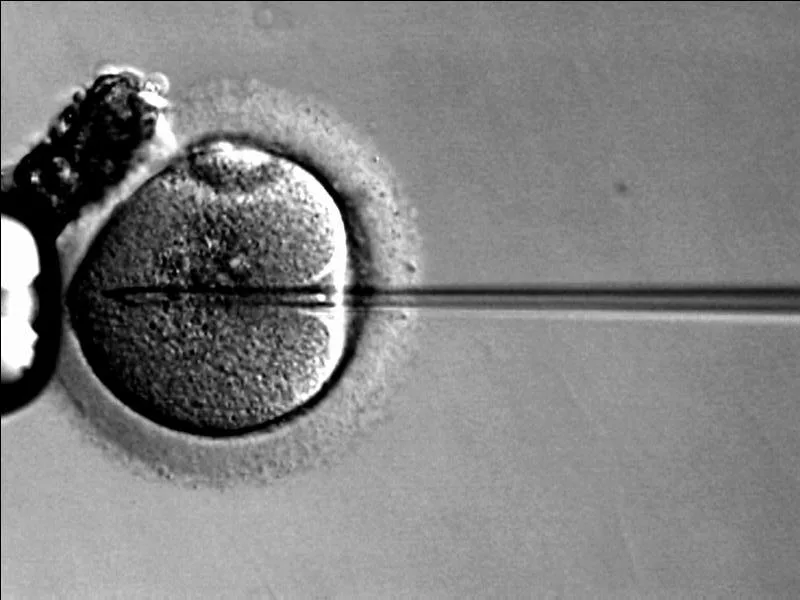
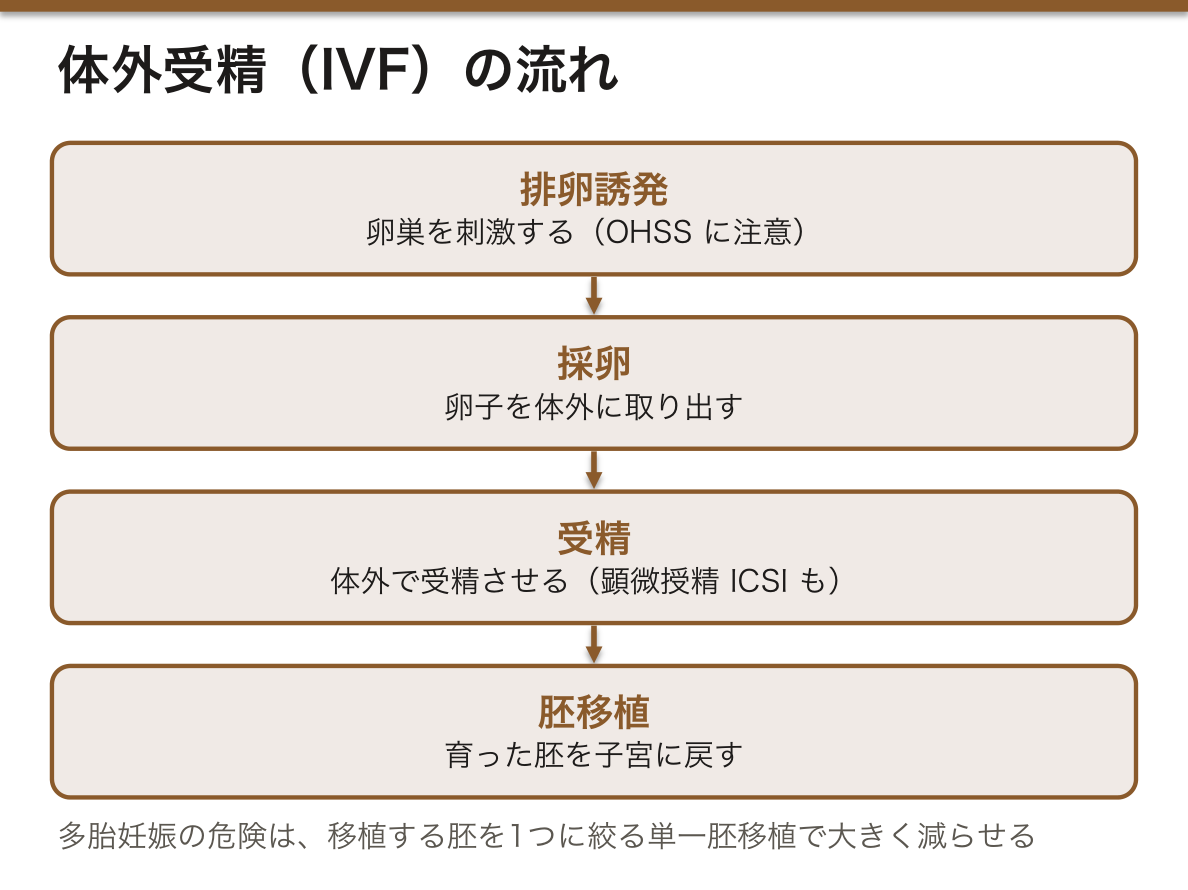
体外受精(IVF)は、卵子を体外に取り出して受精させ、育った胚を子宮に戻す技術である。1978年に英国で最初の子が生まれた。主な適応は3つある。
| 適応 | 具体例 |
|---|---|
| 女性の不妊 | 卵管の閉塞・欠損など |
| 遺伝性疾患の危険 | 着床前に胚を検査し、病気をもたない胚を選ぶ |
| 精子の質の低下 | 卵子に精子を直接注入する顕微授精(ICSI)を組み合わせる |
危険としては、子宮外妊娠、多胎妊娠に伴う早産、そして排卵誘発・採卵・繰り返す失敗による身体的・心理的な負担への反復的な曝露がある。卵巣過剰刺激症候群(OHSS)も知られた合併症である。
IVF への反対論は4つに整理できる。①性交だけが正しい生殖の方法だとする立場(保守派)。②女性の健康への危険。③胚の道徳的地位——複数の胚を作り、移植されない胚を凍結・廃棄することへの反対。④「高齢の母」——提供卵子を使えば閉経後でも妊娠できるので、子が若いうちに親を失う危険や、妊娠の医学的危険が問題にされる。
④については、高齢の父親はあまり非難されないという二重基準の指摘もある。多胎妊娠の危険は、移植する胚を1つに絞る単一胚移植で大きく減らせることが分かり、多くの国の指針がそれを勧めるようになった。危険をなくすために技術を禁じるのではなく、危険を下げる方法を標準にするという、規制の典型的な進み方である。
日本で最初の体外受精児が生まれたのは1983年である。現在では日本の出生のうち1割近くが体外受精などの生殖補助医療によって生まれている。日本産科婦人科学会は原則として単一胚移植を求めており、多胎妊娠は大きく減った。凍結胚の扱い(夫婦の離婚や死亡の後どうするか)など、技術の普及とともに新しい問題も生まれている。
English version
Core
In vitro fertilisation (IVF) takes eggs out of the body, fertilises them, and returns a developing embryo to the uterus. The first IVF baby was born in Britain in 1978. There are three main indications.
| Indication | Examples |
|---|---|
| Female infertility | Blocked or missing fallopian tubes |
| Risk of genetic disease | Testing embryos before implantation and choosing one without the disease |
| Low quality of sperm | Combined with intracytoplasmic sperm injection (ICSI), injecting sperm directly into the egg |
Risks include ectopic pregnancy, premature birth from multiple pregnancy, and repeated exposure to physical and psychological risks from ovarian stimulation, egg retrieval and repeated failure. Ovarian hyperstimulation syndrome (OHSS) is a known complication.
Going further
Objections to IVF fall into four groups: (1) intercourse is the only right way to reproduce (conservative); (2) risks to the woman’s health; (3) the moral status of the embryo — creating several embryos and freezing or discarding those not transferred; (4) ‘old mothers’ — with donor eggs, pregnancy is possible after menopause, raising the risk that children lose parents young, and the medical risks of pregnancy.
On (4), critics point to a double standard: older fathers are rarely blamed. The risk of multiple pregnancy can be greatly reduced by single embryo transfer, which many guidelines now recommend. This is a typical path of regulation: not banning the technique, but making the lower-risk method the standard.
In the clinic
Japan’s first IVF baby was born in 1983. Today close to one in ten births in Japan come from IVF and related assisted reproduction. The Japan Society of Obstetrics and Gynecology asks for single embryo transfer in principle, and multiple pregnancies have fallen sharply. New problems also arise as the technique spreads, such as what to do with frozen embryos after divorce or death.
代理懐胎(契約による妊娠) — 母とは誰か
代理懐胎は、ある女性が、依頼者のために妊娠・出産し、生まれた子を引き渡す取り決めである。2つの型がある。
| 型 | 妊娠する女性と子の遺伝的関係 |
|---|---|
| 伝統型(古典型) | 妊娠する女性自身の卵子を使う。遺伝上の母でもある |
| 妊娠代理型(ホスト型) | 依頼者または提供者の卵子でできた胚を移植する。遺伝的な関係はない |
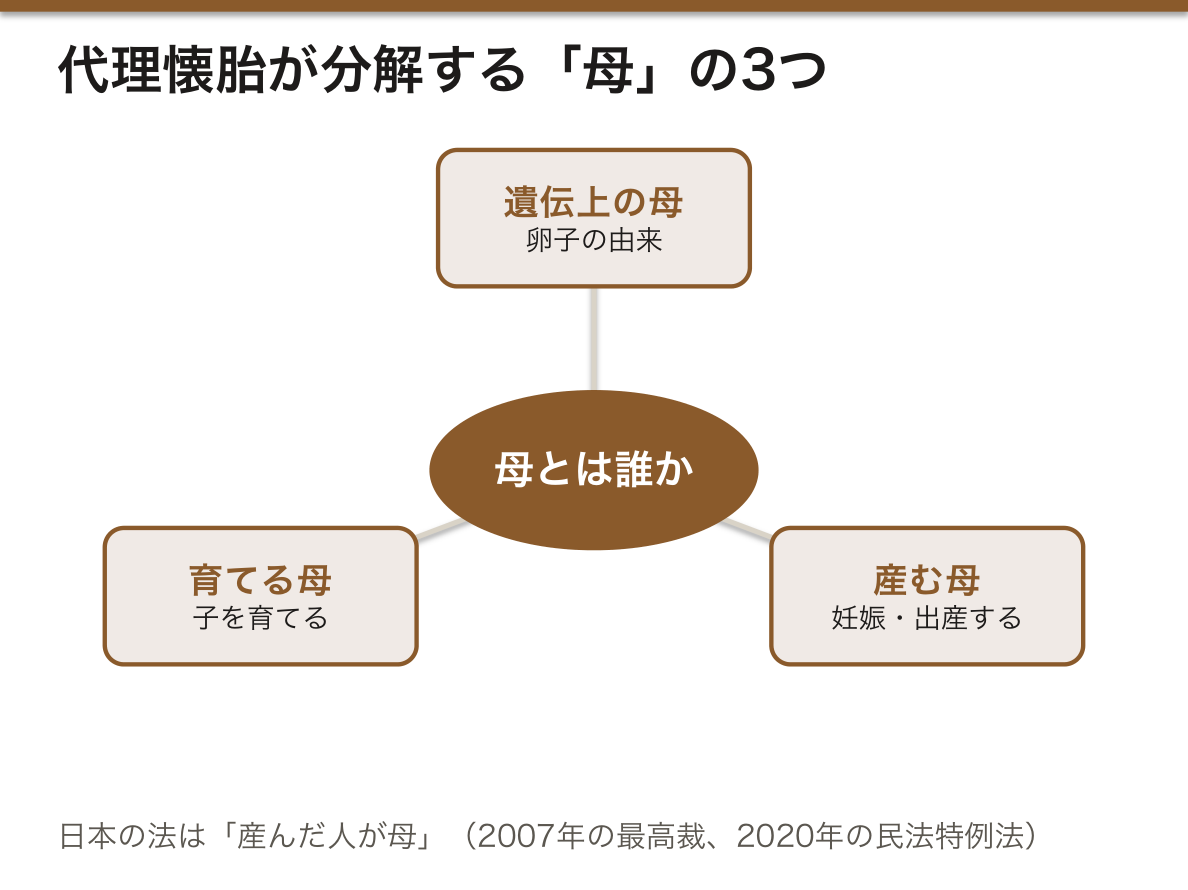
代理懐胎は「母であるとはどういうことか」を根本から問い直す。母であることが、遺伝上の母・産む母・育てる母の3つに分解されるからである。
主な反対論は、子への心理的な影響、人の生命の商品化(子の売買ではないか)、女性の身体の商品化(経済的に弱い女性が子宮を貸す存在として使われる)の3つである。
用語の問題もある。「代理(surrogate)」という言葉は、依頼した父の遺伝子こそが本物で、妊娠・出産する女性は不自然な代役にすぎない、という見方を含む。そこで、価値判断を含みにくい「契約による妊娠(contract pregnancy)」という呼び方を使う論者がいる。
商品化への反論としては、支払いは子に対してではなく、妊娠という労働と医学的な危険への対価だ、という主張がある。また「妊娠がどう感情に影響するか前もって分からないから女性は有効な同意ができない」という議論は、女性を判断能力のない者として扱うものだという批判もある。一方、妊娠代理型では遺伝的なつながりがないために、貧しい国の、法的に自分を守る手段のない女性が依頼されやすくなる、という搾取の危険が指摘されている。米国では、出産した女性が子の引き渡しを拒んで親権が争われた事件(ベビーM事件)が大きな議論を呼んだ。
日本には代理懐胎を直接規制する法律はないが、日本産科婦人科学会は会告で代理懐胎の実施を認めていない。そのため海外で代理懐胎を依頼する例がある。最高裁は2007年、海外の代理懐胎で生まれた子について、法律上の母は出産した女性だとする判断を示した。2020年の民法特例法も、提供された卵子で妊娠・出産した場合、出産した女性を母とすると定めている。日本の法は「産んだ人が母」という線を保っている。
English version
Core
Surrogacy is an arrangement in which a woman becomes pregnant, gives birth for others, and hands over the child. There are two types.
| Type | Genetic relationship between the pregnant woman and the child |
|---|---|
| Classic (traditional) | Uses the pregnant woman’s own egg; she is also the genetic mother |
| Gestational | An embryo from the intended parents’ or a donor’s egg is transferred; no genetic link |
Surrogacy raises the basic question of what it means to be a mother, because motherhood splits into three: genetic, gestational and social.
The main objections are psychological effects on children, commodification of human life (is it selling a baby?), and woman as a commodity (economically weak women used as wombs to rent).
Going further
There is also a problem of terms. ‘Surrogate’ suggests that the commissioning father’s genes are what is real, and the pregnant woman is merely an unnatural substitute. Some writers therefore use the more neutral ‘contract pregnancy’.
Against the commodification objection, some argue that payment is not for the child but for the work of pregnancy and its medical risks. Others criticise the claim that women cannot give valid consent because they cannot predict their feelings, saying it treats women as incompetent. On the other hand, because there is no genetic link in gestational surrogacy, poor women in other countries with no legal means to protect themselves may be hired more easily — a risk of exploitation. In the US, the Baby M case, in which the woman who gave birth refused to give up the child, caused great debate.
In the clinic
Japan has no law directly regulating surrogacy, but the Japan Society of Obstetrics and Gynecology does not allow it. Some Japanese couples therefore commission surrogacy abroad. In 2007 the Supreme Court held that for a child born through surrogacy abroad, the legal mother is the woman who gave birth. The 2020 special civil law also states that when a woman becomes pregnant with a donated egg and gives birth, she is the mother. Japanese law keeps the line ‘the one who gives birth is the mother’.
まとめ
| 生殖をめぐる選択 — 5つの立場 | 避妊・不妊手術・妊娠中絶、人工授精、出生前・着床前の検査——生殖の選択はどんな道徳原則に従うべきか。 |
|---|---|
| 胚の道徳的地位 — 「いつ命が始まるか」ではなく「いつ道徳的に重くなるか」 | 妊娠中絶・胚を使う研究・生殖技術はどれも、胚(や胎児)を死なせることを道徳的に正当化できるかという問いにつながる。 |
| 生殖技術と社会の価値観 — 保守派とフェミニズムの両極 | 生殖技術は、社会のさまざまな価値観とどう折り合うのか。 |
| 人工授精 — 配偶者間(AIH)と非配偶者間(AID) | 人工授精は最も古い生殖補助技術で、精液を器具で子宮内などに注入する。 |
| 体外受精 — 適応・危険・反対論 | 体外受精(IVF)は、卵子を体外に取り出して受精させ、育った胚を子宮に戻す技術である。 |
| 代理懐胎(契約による妊娠) — 母とは誰か | 代理懐胎は、ある女性が、依頼者のために妊娠・出産し、生まれた子を引き渡す取り決めである。 |
このノートは医学生が授業の内容を自分の言葉でまとめたもので、診療の判断に使うものではありません。誤りに気づいたらお知らせください。