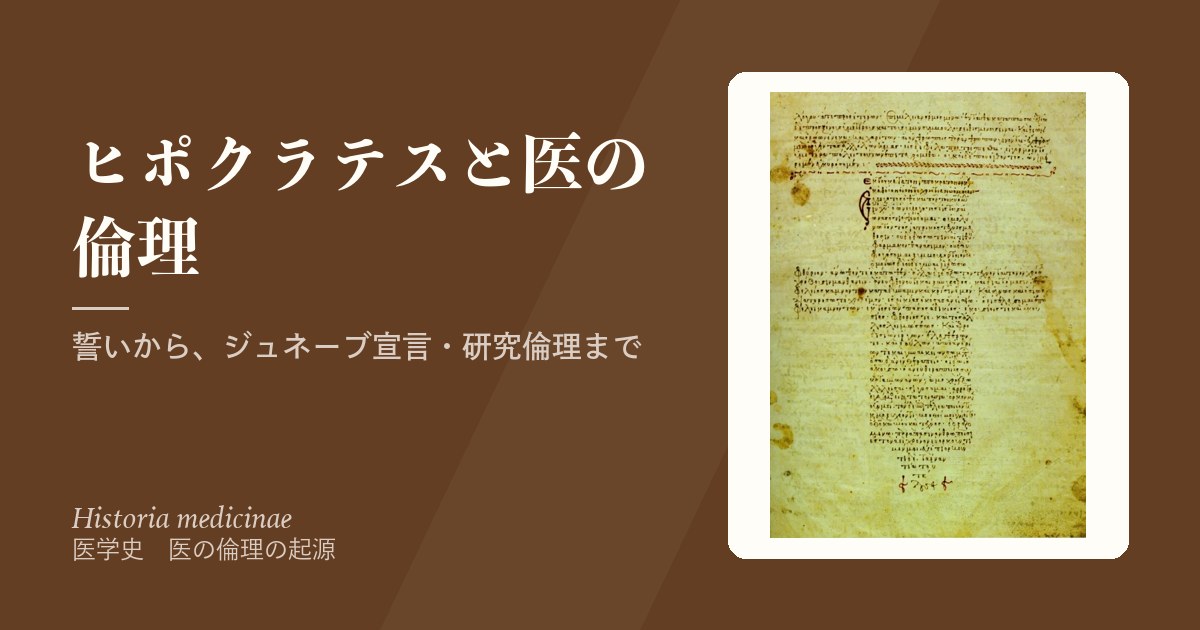
ヒポクラテスの名は、医学の方法だけでなく医師のふるまいの起点としても残っている。全集には『誓い』のほか、医師の資質と教育を論じた『法』などの短い著作があり、医師とはどういう人であるべきかを2400年前の言葉で語っている。
この章では、まず『誓い』と『法』の中身を読み(引用は F. Adams の英訳など19世紀の古典訳による)、そこから「害をなすな」・守秘義務・父権主義という今も続く論点を取り出す。そのうえで、20世紀の惨禍を経て作られたジュネーブ宣言・ニュルンベルク綱領・ヘルシンキ宣言が、誓いの何を受け継ぎ、何を変えたかを見る。
古い誓いをそのまま今の規範とみなすことも、時代遅れとして捨てることも正しくない。何が変わらず、何が変わったかを見分けるのがこの章の目標である。
- ヒポクラテスの誓い — 何を誓っているのか
- 『法』— 医師になる者の条件と、「名ばかりの医師」
- 「害をなすな」— 格言の出所と、医療倫理の4原則
- 誓いの「古い」部分 — 父権主義からインフォームド・コンセントへ
- 守秘義務 — 2400年続く約束
- ジュネーブ宣言 — 現代の「医師の誓い」
- ニュルンベルク綱領とヘルシンキ宣言 — 研究の倫理
ヒポクラテスの誓い — 何を誓っているのかIusiurandum
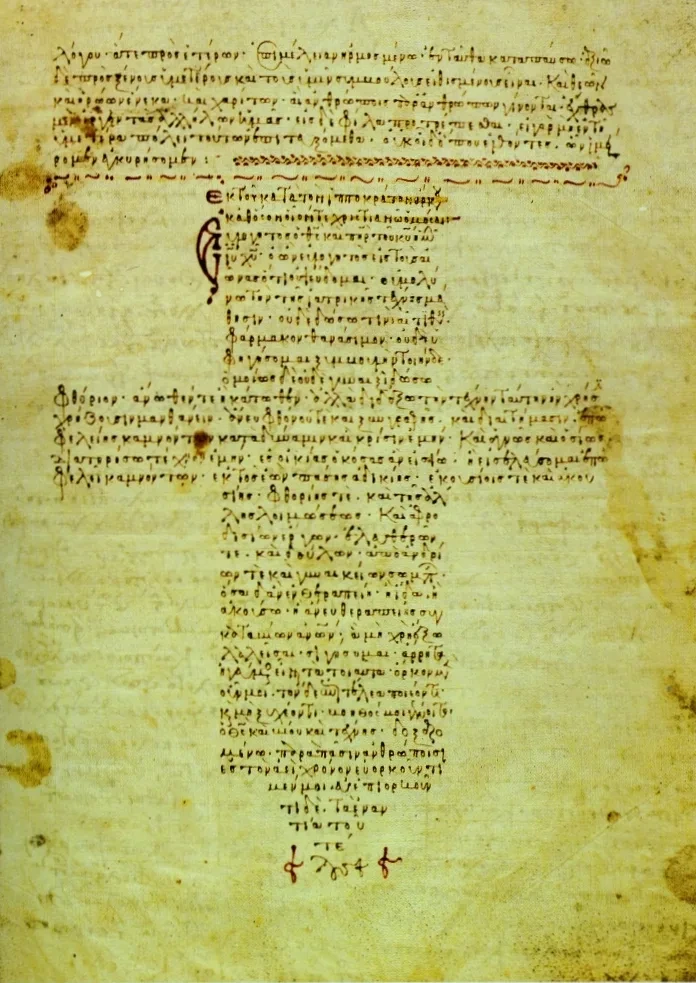
『誓い』は、医術を学ぶ者が神々の前で立てる誓いの形をとっている。内容は大きく①師と医術の共同体への義務と②患者に対する義務の2つに分けられる。
| 部分 | 内容(要約) |
|---|---|
| はじめ | 医神アポロン・アスクレピオス・ヒュギエイア・パナケイアにかけて誓う |
| 師への義務 | 師を親のように敬い、困れば助け、師の息子には無償で医術を教える。教えるのは誓いを立てた弟子だけ |
| 治療の原則 | 自分の能力と判断に従い、患者の利益のために養生法を用い、害と不正から遠ざける |
| 禁止 | 頼まれても致死の薬を与えない。女性に堕胎のための器具を与えない |
| 分業 | 結石の患者にもメスを使わず、それを業とする者に任せる |
| 家庭での行い | 病家に入るのは患者の利益のためだけ。不正や、自由人・奴隷を問わず性的な関係を慎む |
| 守秘 | 治療の中で、また治療の外で見聞きした、口外すべきでないことは秘密として守る |
『誓い』を誰が書いたかはわかっていない。ヒポクラテス本人とは考えにくく、全集の他の著作と考えが合わない部分もあり、古代にすべての医師が立てた誓いだったわけでもない。それが「医師の誓い」の代名詞になったのは、中世以降、キリスト教の世界と大学の医学部がこれを採り入れ、書き直しながら受け継いだからである。
注目すべきは、誓いの前半が医術の共同体(ギルド)への忠誠に多くを割いている点である。師に尽くし、誓った弟子にだけ教える——これは専門職が自分たちの知識と身分を守る仕組みでもあった。今の医師も、医師会や学会、臨床研修の指導関係という形で専門職の共同体に属している。患者への義務と、仲間への義務が最初から一緒に書かれていたことは、専門職とは何かを考える手がかりになる。
臨床では:誓いの「患者の利益のために」は今の善行原則、「害と不正から遠ざける」は無危害原則と正義、「性的関係を慎む」は職業上の境界(バウンダリー)の規範に対応する。多くの医学部が入学式や白衣授与式で、現代向けに書き直した誓いを学生に読ませている。
English version
Core
The Oath is written as a vow taken before the gods by someone learning the art of medicine. Its content falls into two parts: (1) duties to the teacher and the community of the art, and (2) duties to patients.
| Part | Content (summary) |
|---|---|
| Opening | Swears by Apollo the physician, Asclepius, Hygieia and Panacea |
| Duty to the teacher | Honour the teacher like a parent, help him in need, teach his sons the art without fee; teach only pupils who have taken the oath |
| Principle of treatment | Use regimen for the benefit of the sick, according to one’s ability and judgement, and keep them from harm and injustice |
| Prohibitions | Not to give a deadly drug, even if asked; not to give a woman a means to cause abortion |
| Division of labour | Not to use the knife, even on sufferers from stone, but leave this to those who practise it |
| Conduct in homes | Enter a house only for the benefit of the sick; avoid injustice and sexual relations with anyone, free or slave |
| Confidentiality | Keep secret what one sees or hears, in treatment or outside it, that should not be spread abroad |
Going further
We do not know who wrote the Oath. It is unlikely to be Hippocrates himself; some of its ideas do not fit other works in the Corpus, and not every ancient doctor took it. It became the symbol of “the doctor’s oath” because from the Middle Ages, Christian Europe and university medical faculties adopted it and passed it on, rewriting it as they went.
Notice that the first half spends much space on loyalty to the community of the art (a guild). Serve the teacher; teach only sworn pupils — this was also a way for a profession to protect its knowledge and status. Doctors today also belong to professional communities: medical associations, academic societies, the teacher–trainee relation in clinical training. That duties to patients and duties to colleagues were written together from the beginning helps us think about what a profession is.
In the clinic
“For the benefit of the sick” matches today’s principle of beneficence; “keep them from harm and injustice” matches non-maleficence and justice; avoiding sexual relations matches the rules on professional boundaries. Many medical schools have students read a modern rewritten oath at entrance or white-coat ceremonies.
『法』— 医師になる者の条件と、「名ばかりの医師」
全集の短い著作『法』は、医学教育論である。冒頭で著者は、医術はあらゆる技術の中で最も高貴なのに、それを行う者と評価する者の無知のせいで最も遅れている、と嘆く。理由は、医術を誤っても、都市が科す罰は「恥」しかないことである。だから医師は、悲劇の舞台に立つ役者のようなもの——姿は医師だが中身は違う——で、「名の上では多いが、実際にはごく少ない」。
では本物の医師になるには何が要るか。著者は6つを挙げる。生まれつきの素質・教育・学ぶのに適した環境・若いうちからの教え・勤勉・時間のゆとりである。
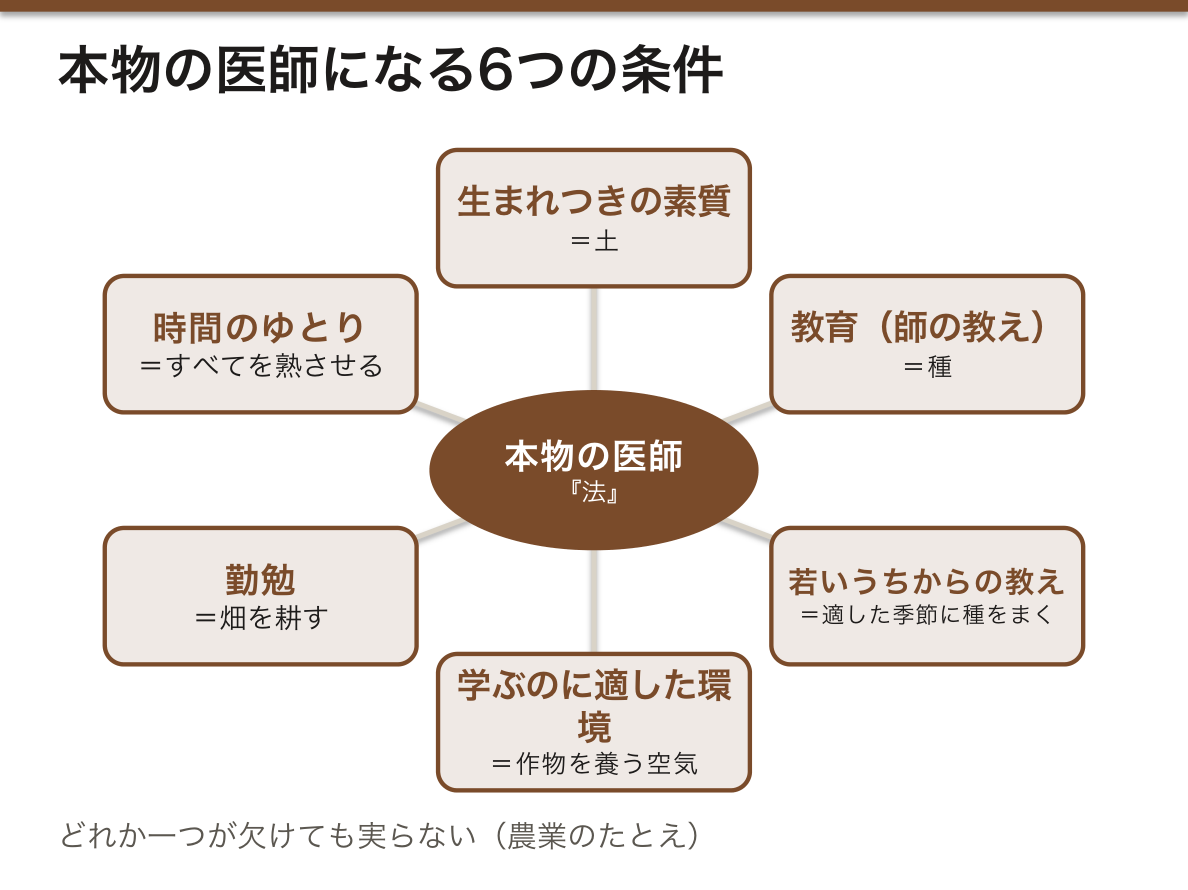
著者はこれを農業にたとえる。素質は土、師の教えは種、若いうちの教育は適した季節に種をまくこと、学ぶ場所は作物を養う空気、勤勉は畑を耕すこと、そしてすべてを熟させるのは時間である。なぜこのたとえが的確か。どれか一つが欠けても実らないからである。素質があっても師がいなければ育たず、よい師がいても本人が耕さなければ実はならない。
さらに著者は、知識と思い込みを区別する。知識は本当に知っている状態を、思い込みは無知を生む。そして経験の乏しさは、臆病と無謀の両方を育てると言う。臆病は力の欠如を、無謀は技術の欠如を示す。最後の一節は、聖なることは聖なる者にだけ、その学の奥義に通じるまでは俗人に伝えてはならない、と結ぶ。
臨床では:「罰が恥しかない」という嘆きへの今の答えが、免許制度である。日本では医師国家試験に合格して免許を受けた者だけが医業を行え(医師法)、問題を起こした医師には医道審議会を経た行政処分がある。「経験の乏しさは臆病と無謀を生む」は、研修医が一人で抱え込まず、早めに上級医に相談することの大切さとしてそのまま通じる。
English version
Core
The short work The Law is about medical education. At the start the author complains that medicine is the noblest of all arts, yet it is the furthest behind, because of the ignorance of those who practise it and those who judge them. The reason: when medicine goes wrong, the city’s only punishment is disgrace. So doctors are like actors on the tragic stage — they look like doctors but are not — and physicians are “many in title but very few in reality”.
What does it take to become a real doctor? The author lists six things: a natural disposition, instruction, a favourable place for study, early tuition, love of labour, and leisure.
Going further
He compares this to farming. Natural ability is the soil; the teacher’s lessons are the seed; teaching in youth is sowing in the right season; the place of study is the air that feeds the crop; hard work is cultivating the field; and it is time that brings everything to ripeness. Why is the comparison good? Because if any one part is missing, there is no harvest. Talent without a teacher does not grow; a good teacher is useless if the student does not cultivate.
The author also separates knowledge from opinion: knowledge makes a person truly know; opinion makes him ignorant. And lack of experience, he says, breeds both timidity and audacity — timidity shows a lack of power, audacity a lack of skill. The last passage says that sacred things are to be given only to sacred persons, and not to outsiders until they are initiated into the science.
In the clinic
Today’s answer to “the only punishment is disgrace” is licensing. In Japan only those who pass the national exam and receive a licence may practise medicine (Medical Practitioners Act), and doctors who cause problems face administrative penalties after review by the Medical Ethics Council. “Inexperience breeds timidity and audacity” fits junior doctors directly: do not carry everything alone; consult a senior early.
「害をなすな」— 格言の出所と、医療倫理の4原則Primum non nocere
「まず、害をなすな」(Primum non nocere)は、ヒポクラテスの言葉として最もよく引かれる。しかしこのラテン語の標語はヒポクラテスの本文にはない。後世(19世紀ごろ)に広まった言い回しである。もとになったのは、全集『流行病』の「病気については2つのことを習慣にせよ。助けること、少なくとも害をなさないこと」という一節で、誓いの「害と不正から遠ざける」も同じ精神に立つ。
大事なのは、原文が「害をなすな」だけでなく「助けよ」と対になっていることである。害を恐れて何もしないことは、この格言の意図ではない。
なぜ「少なくとも害をなさない」が必要だったのか。古代の治療は効果が乏しく、瀉血や下剤のように体を弱らせる治療も多かった。自然治癒力に任せたほうがよい場面が少なくなかったのである。今の医療は強力になったぶん、逆に害も大きくなりうる。手術・抗がん剤・多剤併用は、利益が害を上回るときにだけ正当化される。つまりこの格言は、どの時代にも「その介入の利益は害に見合うか」という問いとして生き続けている。
20世紀後半、ビーチャムとチルドレスは医療倫理を4つの原則に整理した。
| 原則 | 意味 | ヒポクラテスとの関係 |
|---|---|---|
| 自律尊重 | 患者が自分で決めることを尊重する | 誓いにはない。20世紀に加わった |
| 無危害 | 害を与えない | 「少なくとも害をなさない」 |
| 善行 | 患者の利益をはかる | 「患者の利益のために」 |
| 正義 | 利益と負担を公正に分ける | 「不正から遠ざける」に一部 |
臨床では:「害をなすな」は、検査や治療をしすぎないこと(過剰診断・ポリファーマシーの見直し)にも当てはまる。4原則がぶつかる場面——たとえば患者が勧められた治療を拒むとき(自律尊重と善行)——では、どの原則を優先したかを言葉にして説明できることが、今の医師に求められている。
English version
Core
“First, do no harm” (Primum non nocere) is the most quoted “saying of Hippocrates”. But this Latin motto does not appear in the Hippocratic texts; it spread later, around the 19th century. Its source is the line in Epidemics: “As to diseases, make a habit of two things — to help, or at least to do no harm.” The Oath’s “keep them from harm and injustice” has the same spirit.
What matters is that the original pairs “do no harm” with “help”. Doing nothing out of fear of harm is not what the saying means.
Going further
Why was “at least do no harm” needed? Ancient treatments did little good, and many, like bloodletting and purging, weakened the body. Often it was better to leave things to the healing power of nature. Modern medicine is powerful, so its harms can also be great. Surgery, chemotherapy and many drugs together are justified only when the benefit is greater than the harm. So in every age the saying lives on as the question: “Is the benefit of this intervention worth its harm?”
In the late 20th century, Beauchamp and Childress organised medical ethics into four principles.
| Principle | Meaning | Link to Hippocrates |
|---|---|---|
| Respect for autonomy | Respect the patient’s own decisions | Not in the Oath; added in the 20th century |
| Non-maleficence | Do no harm | “At least do no harm” |
| Beneficence | Act for the patient’s good | “For the benefit of the sick” |
| Justice | Share benefits and burdens fairly | Partly in “keep from injustice” |
In the clinic
“Do no harm” also applies to not doing too many tests or treatments (overdiagnosis, reviewing polypharmacy). When the principles clash — for example, when a patient refuses a recommended treatment (autonomy against beneficence) — today’s doctor must be able to say in words which principle he put first, and why.
誓いの「古い」部分 — 父権主義からインフォームド・コンセントへ
『誓い』には、今の規範とそのままは重ならない部分がある。
①致死の薬と堕胎の禁止:安楽死や人工妊娠中絶をめぐる議論で今も引かれるが、国や時代によって法と倫理の答えは分かれている。②「メスを使わない」:結石の手術をそれを業とする者に任せるという条文で、内科医と外科医の分業を表すと読まれることが多い。③神々への誓い:宗教の違う人が多い今の社会では、多くの医学部が神への呼びかけを外した版を使っている。
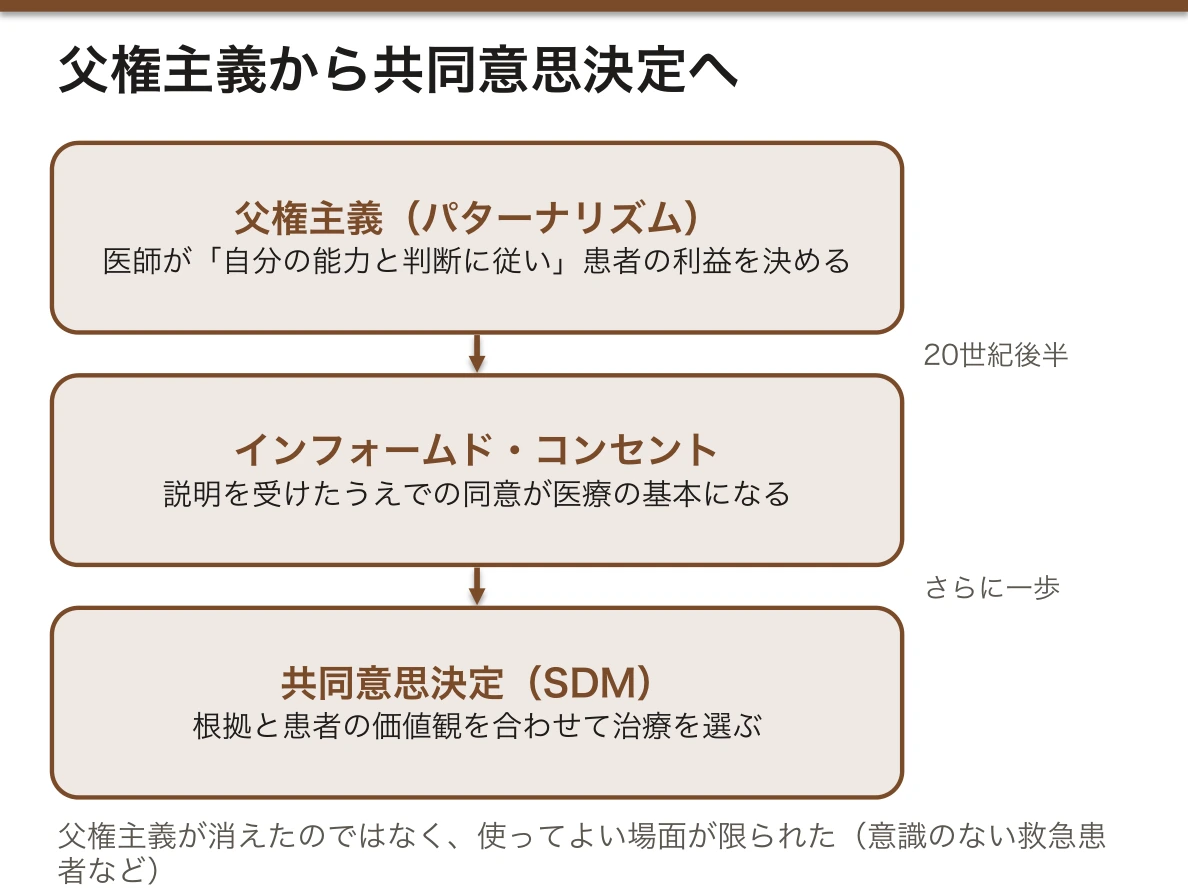
最も大きな違いは、誓いの中に患者が自分で決めるという考えがまったくないことである。誓いの主語はいつも医師で、医師が「自分の能力と判断に従い」患者の利益を決める。これを父権主義(パターナリズム)という。親が子のためを思って決めるように、医師が患者のためを思って決める。
なぜそれが長く当然だったのか。医師と患者の間には知識の大きな差があり、患者も「先生にお任せします」と望むことが多かったからである。パリの病院医学で医師が診断の主導権を握ってからは、なおさらそうだった。それが変わったのは20世紀後半で、患者の権利運動、医学研究での人権侵害への反省、法廷での判決が重なり、説明を受けたうえでの同意(インフォームド・コンセント)が医療の基本になった。「患者の利益」を医師が一人で決めるのではなく、患者と一緒に決めることへの転換である。
臨床では:日本の医療法は、医療者が適切な説明を行い、患者の理解を得るよう努めることを定めている。今は一歩進めて、根拠と患者の価値観を合わせて治療を選ぶ共同意思決定(SDM)が勧められる。一方、意識のない救急患者のように同意が得られない場面では、医師が患者の最善の利益で判断する——父権主義が完全に消えたのではなく、使ってよい場面が限られたと理解するとよい。
English version
Core
Some parts of the Oath do not match today’s rules directly.
(1) No deadly drug, no abortion: still quoted in debates on euthanasia and abortion, but the legal and ethical answers differ by country and era. (2) “Not using the knife”: the line that leaves operations for stone to those who practise them is often read as the division of labour between physicians and surgeons. (3) Swearing by the gods: in today’s societies with many religions, most medical schools use versions without the gods.
Going further
The biggest difference is that the Oath has no idea at all of the patient deciding for himself. The subject is always the doctor, who decides the patient’s benefit “according to my ability and judgement”. This is paternalism: the doctor decides for the patient’s good, as a parent decides for a child.
Why was this normal for so long? There was a large gap in knowledge between doctor and patient, and patients often wished to “leave it to the doctor”. After Paris hospital medicine gave doctors control of diagnosis, this was even more so. It changed in the late 20th century, when patients’ rights movements, regret over human-rights abuses in medical research, and court rulings came together, and informed consent became the basis of care. The shift was from the doctor deciding “the patient’s good” alone to deciding together with the patient.
In the clinic
Japan’s Medical Care Act says that health professionals should give proper explanations and try to gain the patient’s understanding. Going further, shared decision-making (SDM), which chooses treatment by combining evidence with the patient’s values, is now recommended. But when consent cannot be obtained, as with an unconscious emergency patient, the doctor decides in the patient’s best interest. Understand it this way: paternalism has not disappeared; the situations where it may be used have been limited.
守秘義務 — 2400年続く約束
『誓い』の最後の約束は、治療の中で、また治療の外で見聞きしたことのうち、口外すべきでないことは秘密として守ることである。この守秘義務は、誓いの条文の中で最も形を変えずに今に残ったものの一つである。
今の日本では、医師の守秘義務は刑法の秘密漏示罪(第134条)で定められ、医師が正当な理由なく業務上知った人の秘密を漏らすと罰せられる。加えて個人情報保護法が診療記録などの扱いを定めている。
なぜ守秘がそれほど重要なのか。患者は、秘密が守られると信じるからこそ、性生活・飲酒・薬物・家庭の事情など、診断に欠かせない話を打ち明ける。守秘が崩れれば、患者は話さなくなり、診断そのものが成り立たなくなる。守秘は患者のためであると同時に、医療という仕組みが働くための条件なのである。
ただし守秘は絶対ではない。地域の医学の章で見たように、19世紀末から届出が必要な感染症については公共の安全が優先されるようになった。今も感染症法による届出、虐待が疑われるときの通告など、法が定める正当な理由があれば秘密を伝えることが認められ、むしろ義務になる場合もある。「腸チフスのメアリー」の事例が示したように、個人の秘密と公共の安全の境界線をどこに引くかは、時代ごとに問い直されてきた。
臨床では:病棟のエレベーターや SNS で患者のことを話さない、電子カルテを必要なく閲覧しない、といった日常のふるまいが守秘の実践である。一方、児童虐待を疑ったときの通告は守秘義務違反にあたらないと法律で明記されている。守るべき秘密と、伝えるべき情報を見分けることが求められる。
English version
Core
The last promise of the Oath is to keep secret whatever one sees or hears, in treatment or outside it, that should not be spread abroad. This duty of confidentiality is one of the parts of the Oath that has survived with the least change.
In Japan today, a doctor’s duty of confidentiality is set by the crime of unlawful disclosure of secrets in the Penal Code (Article 134): a doctor who reveals, without good reason, a secret learned at work can be punished. The Act on the Protection of Personal Information also governs how medical records are handled.
Going further
Why does confidentiality matter so much? Patients tell us things that are essential to diagnosis — sex life, drinking, drugs, family problems — because they trust that the secret will be kept. If confidentiality breaks down, patients stop talking, and diagnosis itself fails. Confidentiality is for the patient, and it is also a condition for the medical system to work.
But it is not absolute. As we saw in the chapter on community medicine, from the late 19th century public safety came first for notifiable infections. Today, too, reporting under the infectious diseases law or reporting suspected abuse are cases where a legal, legitimate reason allows — or even requires — passing on a secret. As the case of “Typhoid Mary” showed, where to draw the line between personal secrets and public safety has been asked again in every age.
In the clinic
Not talking about patients in hospital lifts or on social media, and not opening electronic records without need, are daily acts of confidentiality. On the other hand, the law states clearly that reporting suspected child abuse is not a breach of confidentiality. Doctors must tell secrets to keep from information to pass on.
ジュネーブ宣言 — 現代の「医師の誓い」
ジュネーブ宣言は、1948年に世界医師会(WMA)が採択した、ヒポクラテスの誓いの現代版である。第二次世界大戦中に、医師が強制収容所などで人体実験や虐殺に加わったことへの反省から作られた。1948年の版には、脅されても人道に反して医学の知識を使わないという趣旨の誓いが含まれていた。
その後何度も改訂され、2017年の改訂では患者の自律と尊厳を尊重すること、医師が自分自身の健康と能力にも気を配ることなどが加えられた。
ヒポクラテスの誓いと比べると、何が変わり、何が残ったかがよくわかる。
| ヒポクラテスの誓い | ジュネーブ宣言 | |
|---|---|---|
| 誓う相手 | 医術の神々 | 神への言及なし。自分の名誉にかけて |
| 患者の位置 | 医師が利益を判断する対象 | 自律と尊厳を尊重される主体(2017年) |
| 差別 | 規定なし | 年齢・病気・障害・信条・民族・性別・国籍・政治・人種・性的指向・社会的地位などで差別しない |
| 守秘 | あり | あり(患者の死後も) |
| 師・同僚 | 師を親のように敬う | 師・同僚・学生に敬意を払う。知識を共有する |
| 医師自身 | 規定なし | 自分の健康と能力に気を配る(2017年) |
なぜ「医師自身の健康」が誓いに入ったのか。疲れ切った医師は、よい医療を提供できないからである。燃え尽きや過労による医療事故が世界的な問題になり、医師の健康は患者の安全の一部と考えられるようになった。
臨床では:日本の医師会も「医の倫理綱領」を定めている。また2024年度からは医師の働き方改革として勤務医の時間外労働に上限が設けられた。「自分の健康に気を配る」というジュネーブ宣言の一文は、これから研修医になる人にとって自分ごとの倫理である。
English version
Core
The Declaration of Geneva, adopted by the World Medical Association (WMA) in 1948, is a modern version of the Hippocratic Oath. It was written in response to the doctors who took part in human experiments and killing in concentration camps and elsewhere during the Second World War. The 1948 version included a promise not to use medical knowledge against the laws of humanity, even under threat.
It has been revised several times. The 2017 revision added, among other things, respect for the patient’s autonomy and dignity, and that doctors should attend to their own health and abilities.
Going further
Comparing it with the Hippocratic Oath shows clearly what changed and what stayed.
| Hippocratic Oath | Declaration of Geneva | |
|---|---|---|
| Sworn to | The gods of healing | No gods; on one’s honour |
| Place of the patient | Someone whose good the doctor judges | A person whose autonomy and dignity are respected (2017) |
| Discrimination | Nothing | No discrimination by age, disease, disability, creed, ethnic origin, gender, nationality, politics, race, sexual orientation, social standing and more |
| Confidentiality | Yes | Yes (even after the patient’s death) |
| Teachers and colleagues | Honour the teacher like a parent | Respect teachers, colleagues and students; share knowledge |
| The doctor himself | Nothing | Attend to one’s own health and abilities (2017) |
Why was “the doctor’s own health” added? Because an exhausted doctor cannot give good care. Burnout and errors from overwork became a worldwide problem, and doctors’ health came to be seen as part of patient safety.
In the clinic
The Japan Medical Association also has its own code of medical ethics. And from fiscal 2024, work-style reform for doctors set upper limits on overtime for hospital doctors. The Geneva line about attending to one’s own health is, for those about to become junior doctors, ethics that concerns themselves.
ニュルンベルク綱領とヘルシンキ宣言 — 研究の倫理
ヒポクラテスの誓いは治療する医師の倫理であり、研究については何も言っていない。実験室の医学が力をもった20世紀、その空白が最悪の形で表れた。ナチス・ドイツの医師たちは強制収容所の囚人に、本人の同意なく苛酷な人体実験を行った。日本でも戦時中、731部隊が占領地で人体実験を行った。
戦後のニュルンベルク医師裁判の判決の中で、1947年にニュルンベルク綱領が示された。10項目の第1は、被験者の自発的な同意が絶対に欠かせないということである。
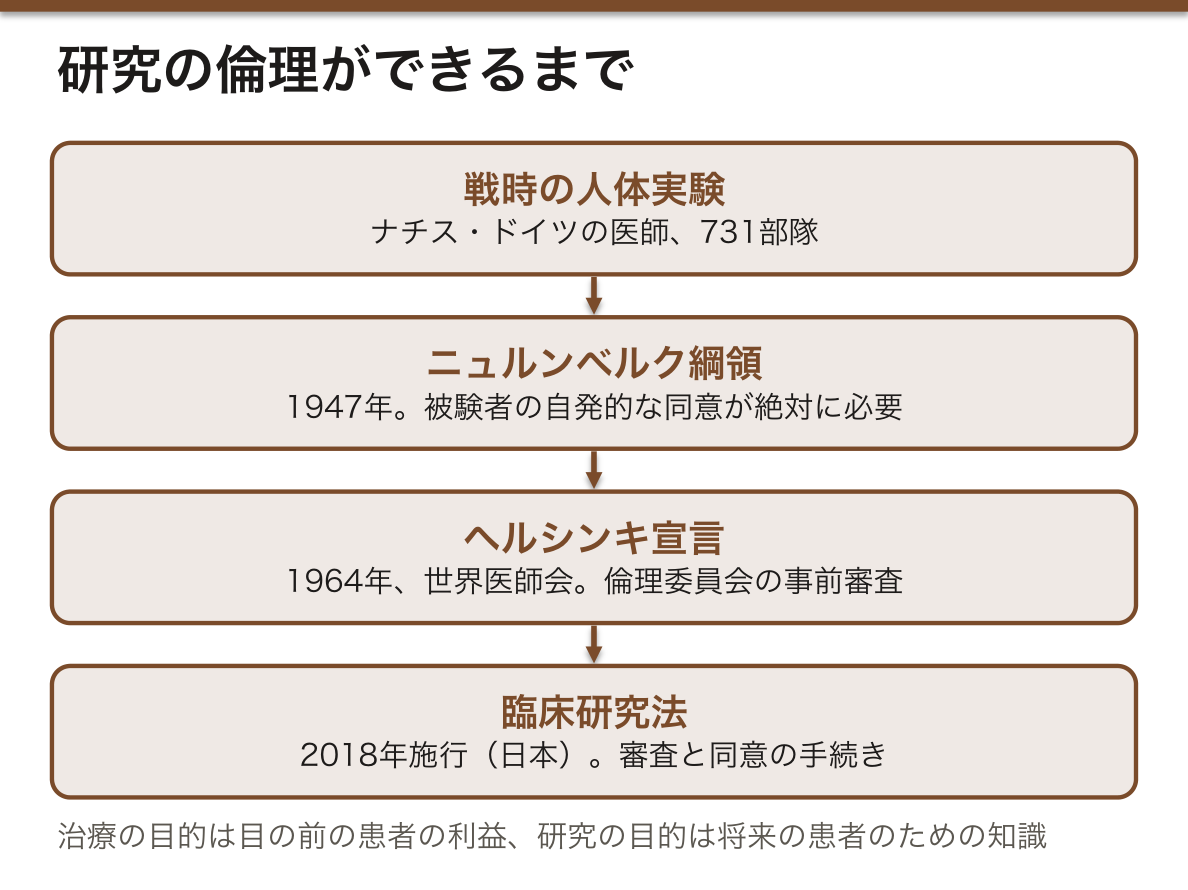
ニュルンベルク綱領は戦争犯罪への答えだったが、ふつうの国のふつうの研究でも人権侵害は起きていた。アメリカのタスキギー梅毒研究では、黒人男性の梅毒患者が、ペニシリンが標準治療になった後も治療されないまま、1970年代初めまで経過を観察された。
そこで世界医師会は1964年にヘルシンキ宣言を採択し、医学研究の倫理原則を定めた。被験者の利益は科学や社会の利益より優先すること、インフォームド・コンセント、研究計画を独立した倫理委員会が事前に審査することなどが柱で、何度も改訂されている。なぜ研究には治療と別の倫理が必要なのか。治療の目的は目の前の患者の利益だが、研究の目的は将来の患者のための知識であり、被験者本人の利益と食い違うことがあるからである。ベルナールが「実験室こそ聖域」と言った実験医学は、人を対象にするとき、人の権利という外側の枠を必要とした。
臨床では:日本では臨床研究法(2018年施行)や、人を対象とする研究の倫理指針が、倫理審査委員会での審査と同意の手続きを定めている。研修医が症例報告や臨床研究に加わるときも、患者の同意と個人情報の保護は最初に確かめることである。これは医学史が最も重い代償を払って学んだ教訓である。
English version
Core
The Hippocratic Oath is an ethic for doctors who treat; it says nothing about research. In the 20th century, when laboratory medicine became powerful, this gap showed itself in the worst way. Doctors in Nazi Germany performed cruel experiments on concentration camp prisoners without their consent. In Japan, too, during the war, Unit 731 carried out human experiments in occupied territory.
In the judgement of the Nuremberg Doctors’ Trial after the war, the Nuremberg Code was set out in 1947. The first of its ten points is that the voluntary consent of the human subject is absolutely essential.
Going further
The Nuremberg Code answered war crimes, but human-rights abuses also happened in ordinary research in ordinary countries. In the US Tuskegee syphilis study, Black men with syphilis were left untreated and observed until the early 1970s, long after penicillin became standard treatment.
So in 1964 the WMA adopted the Declaration of Helsinki, setting ethical principles for medical research. Its pillars include: the interests of the subject come before those of science and society; informed consent; and review of the research plan in advance by an independent ethics committee. It has been revised many times. Why does research need ethics different from treatment? The aim of treatment is the good of the patient in front of you, but the aim of research is knowledge for future patients, which can conflict with the good of the subject himself. The experimental medicine that Bernard called the sanctuary of the laboratory needed, when applied to people, an outer frame of human rights.
In the clinic
In Japan, the Clinical Trials Act (in force from 2018) and the ethical guidelines for research involving people set out review by ethics committees and the steps for consent. When a junior doctor joins a case report or clinical study, patient consent and protection of personal information are the first things to check. This is the lesson medical history learned at the highest price.
まとめ
| ヒポクラテスの誓い — 何を誓っているのか | 『誓い』は、医術を学ぶ者が神々の前で立てる誓いの形をとっている。 |
|---|---|
| 『法』— 医師になる者の条件と、「名ばかりの医師」 | 全集の短い著作『法』は、医学教育論である。 |
| 「害をなすな」— 格言の出所と、医療倫理の4原則 | 「まず、害をなすな」(Primum non nocere)は、ヒポクラテスの言葉として最もよく引かれる。 |
| 誓いの「古い」部分 — 父権主義からインフォームド・コンセントへ | 『誓い』には、今の規範とそのままは重ならない部分がある。 |
| 守秘義務 — 2400年続く約束 | 『誓い』の最後の約束は、治療の中で、また治療の外で見聞きしたことのうち、口外すべきでないことは秘密として守ることである。 |
| ジュネーブ宣言 — 現代の「医師の誓い」 | ジュネーブ宣言は、1948年に世界医師会(WMA)が採択した、ヒポクラテスの誓いの現代版である。 |
| ニュルンベルク綱領とヘルシンキ宣言 — 研究の倫理 | ヒポクラテスの誓いは治療する医師の倫理であり、研究については何も言っていない。 |
このノートは医学生が授業の内容を自分の言葉でまとめたもので、診療の判断に使うものではありません。誤りに気づいたらお知らせください。